Religious schools and religious rites

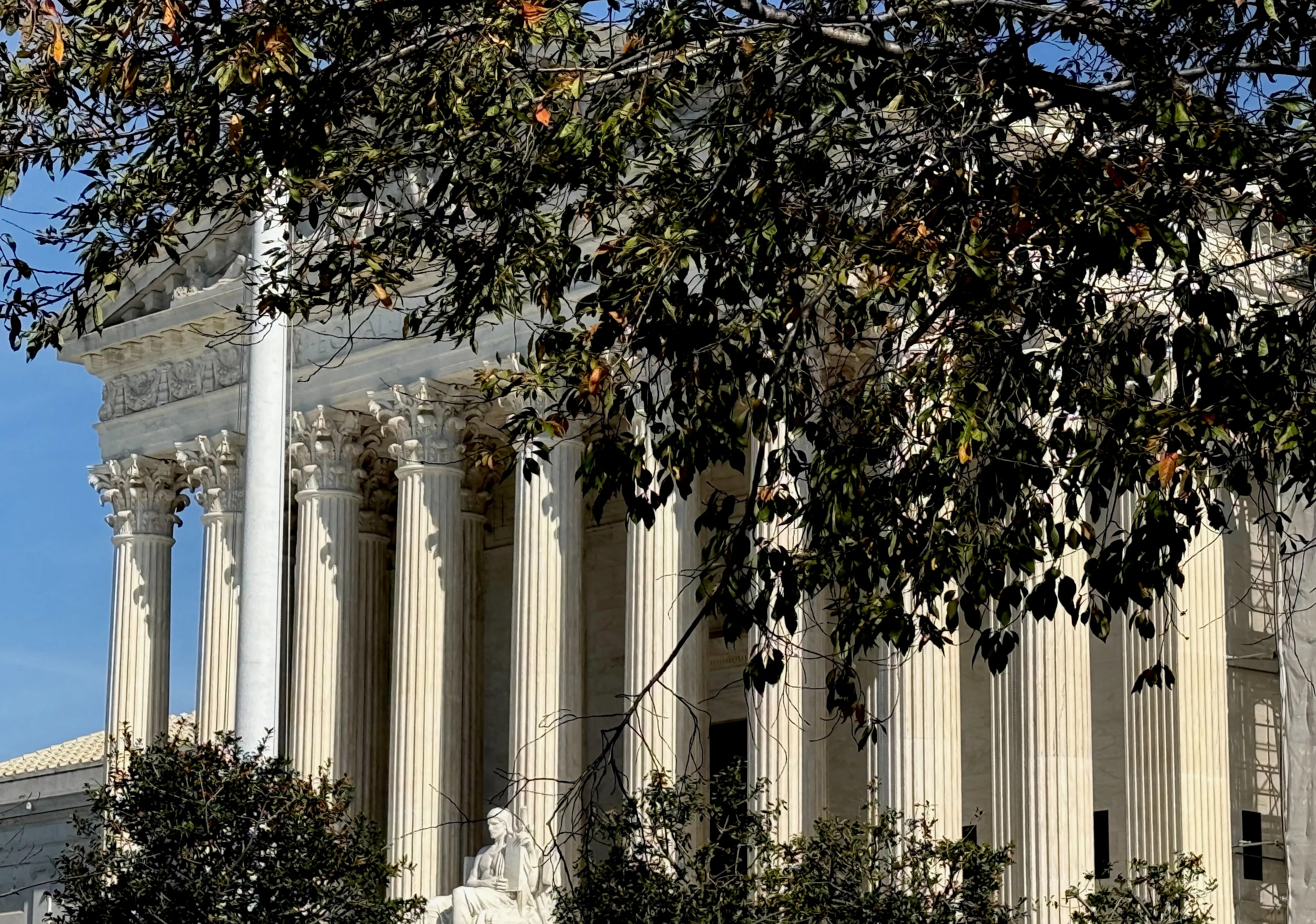
Rights and Responsibilities is a recurring series by Richard Garnett on legal education, the role of the courts in our constitutional structure, and the law of religious freedom and free expression.
Please note that the views of outside contributors do not reflect the official opinions of SCOTUSblog or its staff.
Last summer, in one of the Supreme Court term’s headlining cases, Mahmoud v. Taylor, the justices ruled that – sometimes, at least – parents have a constitutional right to pull their young kids from particular public-school programming. In that case, a group of parents contended that mandating certain lessons and materials relating to sexual orientation and gender identity violated their right to “direct the religious upbringing of their children.” As I have written here before, “[g]iven the relevant doctrines and precedents,” “the majority’s decision was correct.”
A recent, not-much-discussed federal-court ruling involving a California licensing requirement for preschools could, in the coming months, present the justices with a “flip side” or “other shoe dropping” question: May governments require religious schools to permit parental opt-outs from religious instruction and activities? The answer should be “no,” but the U.S. Court of Appeals for the 9th Circuit, in Foothills Christian Ministries v. Johnson, saw the question differently.
There are complicated issues, technical wrinkles, and a variety of claims involved in the case but, in a nutshell, it is California law that any preschool, religious or not, publicly funded or not, must be licensed by the state’s Department of Social Services. And, to be licensed, a preschool must “ensure” that kids are “free to attend religious services or activities of his/her choice.” The law provides that a “child’s authorized representative shall make decisions about the child’s attendance at religious services” and requires schools to “inform each child’s authorized representative” of this right and post a notice about it “in a prominent, publicly accessible area.” In other words, religious preschools may not require kids to participate in the schools’ religious programming, instruction, or worship and must instead permit “visits from the spiritual advisor of [the child’s] choice.”
A group of churches that operate preschools claim, among other things, that California’s licensing rules violate their right to religious freedom. But the 9th Circuit concluded, among other things, that the churches’ concerns about the enforcement of the opt-out rules is, for now, “too speculative” – because lawyers for the state have assured courts that they do not, at present, plan to enforce them – and that the general licensing requirement for preschools is “neutral” and “generally applicable” (that is, it does not discriminate against any particular religion) and satisfies the undemanding “rational basis” standard (that is, these licensing rules are reasonable to effect the state’s interest). Put aside, for now, questions we might have about the court’s comfort level with the government’s promise not to enforce its laws. If it did, or when it does, what does the Constitution say? And even if, as the court ruled, the state is permitted to require all preschools to secure licenses, does it follow that it may condition those licenses on religious schools compromising their commitments?
Especially after Mahmoud, it might be tempting to think if religious parents have a constitutional right to opt out of lessons to which they object and instruction they believe is contrary to their religious values or imposes an aggressively secularist ideology, then parents whose views and values do not align with those of their kids’ religious school should have a similar right to object. But any perceived similarity between the two situations is an illusion, and the analogy between them is false. The public schools, officials, and administrators in Mahmoud were government actors, and the First and 14th Amendments expressly limit what governments may do. By contrast, the church-run preschools in the California case are not arms or functionaries of the state. Religious actors are protected, not regulated, by the Constitution. The government’s schools and school boards do not have constitutional rights; they are limited and constrained by the rights of non-state actors and institutions. State schools do not have the authority to coerce students to participate in anti-religious instruction; religious schools do have the right to be authentically and pervasively religious, and to structure their curriculum and character accordingly. A landmark Supreme Court decision, decided a century ago this year, explained why.
In Pierce v. Society of Sisters, the justices unanimously rejected a Ku Klux Klan-sponsored, anti-Catholic law in Oregon that required children to attend government-run schools. They insisted that “the fundamental theory of liberty upon which all governments in this Union repose excludes any general power of the State to standardize its children by forcing them to accept instruction from public teachers only” and affirmed “the liberty of parents and guardians to direct the upbringing and education of [their] children[.]” “The child,” they emphasized, “is not the mere creature of the state.” As I have explained elsewhere, the court did well in repudiating this Platonic authoritarianism.
Because parents have the right – that is, because it is central to the right to religious liberty – to select and supervise the religious education of their children, it follows that religious schools have a right not only to exist but to operate in accord with their religious teachings, traditions, mission, and character. To be sure, as the Pierce court acknowledged, non-state schools and the services they provide may be reasonably regulated. But governments may not add to requirements for, say, smoke alarms and functioning plumbing demands that religious teachings be watered-down or religious formation be made optional.
Now, even after 100 years, there is disagreement and even controversy over how to think about the rule applied, and the right vindicated, in Pierce. Is the freedom to select a religious school for one’s child a dimension of a freestanding, general, and non-textual parental right? Is it an aspect of what many have called our “first freedom,” that is, the right to religious liberty? Both?
Let’s skip ahead about 50 years to a second crucial case. In Wisconsin v. Yoder, Amish parents sought an exemption from a state law that made it a criminal offense to fail to send kids to school until age 16. For these parents and their community, high-school attendance was “contrary to the Amish religion and way of life,” which “are characterized by a fundamental belief that salvation requires life in a church community separate and apart from the world and worldly influence.” The justices concluded that the application of Wisconsin’s compulsory-attendance law burdened constitutionally-protected religious exercise and was not justified or outweighed by the state’s asserted interest in “universal education.”
In many ways, Yoder was and remains, as renowned First Amendment scholar Jesse Choper put it, the “high-water mark” of the Supreme Court’s free-exercise jurisprudence. At the same time, it has been characterized as mysterious and even “unprincipled,” including by writers who celebrate its conclusion. It is fair to say that the ruling is both a landmark and an outlier, and that it has rarely generated litigation success. Indeed, the Supreme Court, in its battered-but-still-standing 1990 decision in Employment Division v. Smith, rejected what many understood Yoder to require, namely, generous religious exemptions even from nondiscriminatory and generally applicable regulations. Yoder called for judge-made accommodations when valid and neutral laws unnecessarily burden religious exercise; Smith insisted that, most of the time, the no-doubt important job of specially accommodating believers belongs to the legislature. The Smith court did not “overrule” Yoder, though, and avoided the awkwardness of appearing anti-Amish by recharacterizing the latter case, implausibly, as involving a “hybrid rights” claim, about which the less said the better.
Return to the present, to Mahmoud, and to the California opt-out mandate that, for now, is lawful so long as the state ignores it. The Mahmoud majority did not predicate its analysis on Smith, but instead recognized, citing Yoder, that government actions that substantially interfere with the religious development of children burden parents’ religious freedom and trigger close and careful judicial scrutiny. Just like the refusal to respect parents’ wishes in Mahmoud failed to satisfy that scrutiny, when the time comes, so should California’s licensing rule purporting to require religious schools to promise bespoke secularization. The appeals court in Foothills Christian Ministries did not reach this stage in the analysis but, before too long, another court will. And that court should conclude that no compelling government interest justifies requiring religious schools to compromise their religious character by exempting parents who have the readily available option of exit. Again, the legally relevant right is not that of an objecting parent to change a religious school’s program; it is the right of a religious school to be as religious as it likes.
And this question or another like it could reach the justices sooner than California’s lawyers expect. About two weeks ago, the Becket Fund for Religious Liberty filed a petition for certiorari, seeking review of another federal appeals court ruling in St. Mary Catholic Parish v. Roy. The dispute involves a “universal” preschool-funding program in Colorado that, in effect, excludes Catholic schools that take Catholic teaching into account when making admissions decisions. Although this case involves participation in a funding program rather than a license to operate, it clearly implicates the close connection between parents’ rights to control the religious education of their children and religious schools’ freedom to operate authentically and with integrity. Will the justices continue to clarify the status and centrality of Pierce and Yoder? Cook up some popcorn, and stay tuned.
Posted in Recurring Columns, Rights and Responsibilities
Cases: Mahmoud v. Taylor