SCOTUStoday for Monday, December 15

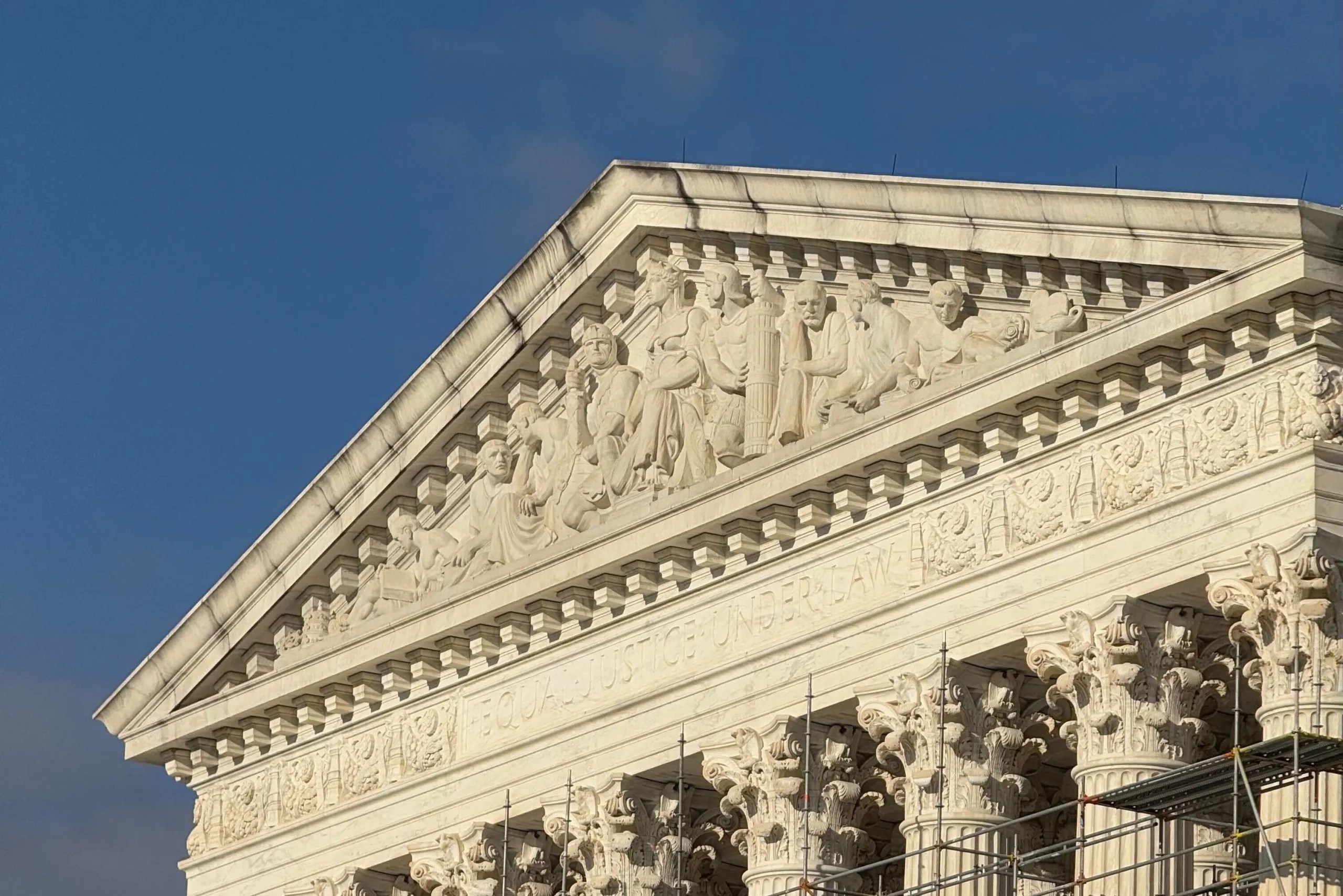
You hear a lot about the 12 days of Christmas this time of year, but what about the first 10 Amendments to the Constitution? On this day in 1791, the Bill of Rights was ratified.
SCOTUS Quick Hits
- On Friday, the justices gathered for their final regularly scheduled private conference of 2025 to discuss cases and vote on petitions for review. This morning, the court is expected to release an order list at 9:30 a.m. EST.
- The court could issue its decision in the interim docket case on President Donald Trump’s effort to deploy the National Guard to Illinois at any time.
Morning Reads
- Supreme Court confronts gun rights pileup (Zach Schonfeld, The Hill) — Early next year, the Supreme Court will hear two cases on gun rights, which address “whether unlawful drug users can carry firearms and Hawaii’s gun permitting regime,” according to The Hill. The justices also are considering several petitions on the Second Amendment, including more than 60 regarding “the federal law that makes it a crime for people with felonies on their records to possess a firearm.” “It’s one of the most prosecuted federal charges. Of the 61,678 cases reported to the U.S. Sentencing Commission in fiscal 2024, roughly 6,700 of them — more than 10 percent — involved felon-in-possession convictions.”
- Supreme Court urged to nix school gender case (Jim Saunders, News Service of Florida, Tallahassee Democrat) — Florida’s Leon County school system has “urged the U.S. Supreme Court to reject a high-profile appeal by a couple who allege their rights were violated after a child wanted to express a gender identity and use pronouns the parents didn’t support,” according to the Tallahassee Democrat. In its brief, the school system contended that the parents, Jeffrey and January Littlejohn, have mischaracterized the school’s actions, and noted that, since the dispute arose, Florida has passed “a parental-rights law that addressed the issue.”
- Flag Burning Is Legal. It Shouldn’t Be (Charles Fain Lehman, The Dispatch)(Paywall) — For his entry in an edition of The Dispatch’s Debate Series about flag burning, Charles Fain Lehman reflected on Texas v. Johnson, a case in which the Supreme Court held that, under some circumstances, flag burning is a form of protected speech. In arguing that flag desecration should be illegal, Lehman asserted that Johnson “overturned the considered judgment of 48 state legislatures, none of which had thought flag desecration laws to produce any constitutional issue whatsoever.”
- In this Supreme Court case, a sledgehammer is better than a scalpel (Jason Willick, The Washington Post)(Paywall) — In a column for The Washington Post, Jason Willick called on the court to consider taking the “hard way” when crafting its decision in Trump v. Slaughter, on the president’s authority to remove the heads of independent, multi-member agencies. Rather than take the “easiest” path toward a ruling in favor of President Donald Trump and “simply … clarify that Trump has the power to fire” these agency heads, the justices could force a restructuring of the agencies and, in that way, “restore the constitutional balance of power.” “There is no elegant way for the Supreme Court to unwind the constitutional damage from decades of independent-agency governance. So the justices might as well weigh alternative ways to bring the branches of government back into balance — including striking at the regulatory state itself,” Willick wrote.
- Perspective: When therapy becomes ‘speech,’ the legal landscape shifts profoundly (Asma Uddin, Deseret News) — In a column for the Deseret News, Asma Uddin reflected on what’s at stake in Chiles v. Salazar, a case on whether “Colorado’s law prohibit[ing] therapists from engaging in any practice that attempts or purports to change a minor’s sexual orientation or gender identity” violates free speech. “Chiles v. Salazar is not simply about LGBTQ youth or parental authority. It is a window into a deeper struggle over how we draw boundaries around professional expertise in an era of expansive free speech protections,” she wrote.
A Closer Look: The Where and When of Supreme Court Opinions
Take a look at the Supreme Court’s December calendar. What do you notice? As of now, there’s nothing calendared after this morning’s order list release; there are no planned arguments, conferences, or, perhaps most importantly, opinion days.
So does that mean there are no decisions coming this month for cases on the oral argument/merits docket? Not necessarily. The court can add random, last-minute opinion days at any point in the term. And the justices don’t have to be in the courtroom on a decision day (although they almost always are).
But let’s back up a minute and talk about the court’s standard process for releasing decisions. Opinion days are not pre-determined. Instead, they are selected by the court as needed during the term and revealed through calendar updates. These days will be marked on the Supreme Court’s website as dark blue “Non-argument Days” on the court’s calendar (that is, if nothing else previously was scheduled on that day) and the website’s “Today at the Court” box will say something like “The Court may release opinions.”
Last term, the court’s calendar typically was updated at least two days – and often four or five days – before the opinion day, and opinion days were most often on Wednesday or Thursday. Although you might associate June with Supreme Court opinions, these days happened throughout the term (there were just as many in February as there were in May). The ones earlier in the term almost always fell on a day on which the justices were already scheduled to hear arguments.
Because of the calendar updates, Supreme Court watchers know opinions are coming before they arrive. But only the court knows which case(s) will be resolved on a particular decision day. Even lawyers who work on Supreme Court cases are left in the dark.
Sometimes, however, it’s easy to guess which opinions are coming, whether because it’s the final opinion day of the term, typically in late June (and on which only a few cases are left to be resolved), or because a case needs to be resolved by a certain deadline. Take, for example, the TikTok case that was heard and decided in January of this year, in which the court was asked to determine whether a law that prevented U.S. companies from distributing or offering updates for the TikTok app unless the app’s Chinese owners sold it to U.S. buyers violated free speech. The TikTok ban was set to take effect on Jan. 19, and the court was expected to issue its opinion before then. It did so on Friday, Jan. 17, without taking the bench.
Or take Trump v. Anderson, in which the court considered whether then-former President Donald Trump could be excluded from Colorado’s primary ballot for the 2024 presidential election. After hearing argument on Feb. 8, 2024, the court announced on Sunday, March 3, that the next day would be a decision day. As expected, since March 5 was Super Tuesday, the court released its decision in the ballot case that Monday (and did so without taking the bench).
An argument against expecting a surprise decision day this month is that the court does not currently face the same sort of specific deadline that it did in the TikTok or Colorado ballot cases. It agreed to fast-track consideration of the tariffs case, but it has made no representations about when it would issue its decision. As always, SCOTUSblog will let readers know if that changes.
SCOTUS Quote
“Ready-made catch-phrases may conceal, but do not solve, serious constitutional problems.”
— Justice Felix Frankfurter in Shapiro v. United States
On Site
From Kelsey Dallas
Five Issues in Front of the Justices
On Friday, the justices gathered for their final regularly scheduled private conference of the year to discuss cases and vote on petitions for review. The petitions that were considered – or reconsidered – address several significant topics, including the scope of Second Amendment protections, a unique response to climate change, and whether the government can seize a $95,000 plane over a six-pack of beer. We could learn the fate of these petitions in this morning’s order list, as Kelsey noted in her analysis.
Posted in Featured, Newsletters