SCOTUStoday for Tuesday, December 2

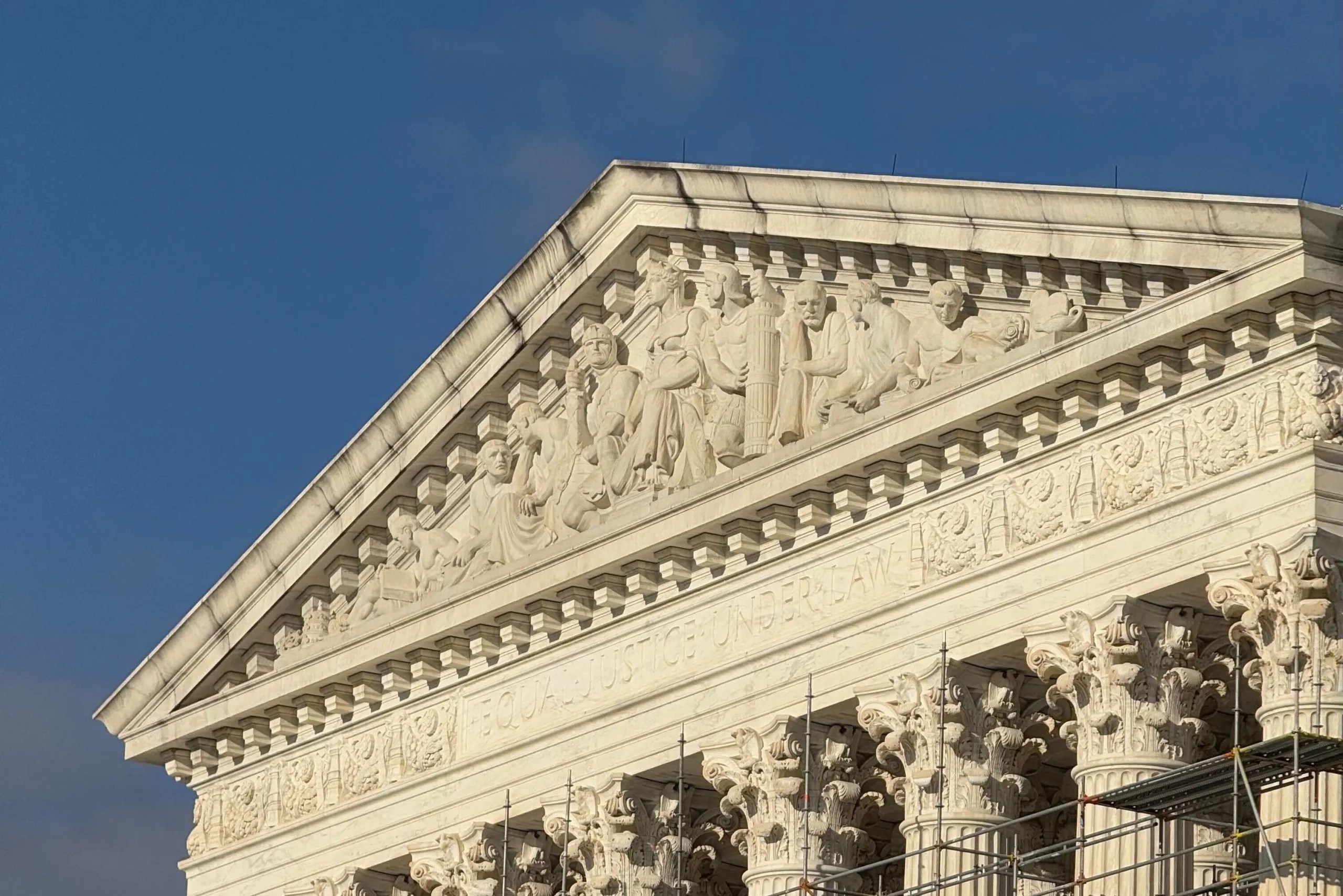
On this day in 1902, President Theodore Roosevelt nominated Oliver Wendell Holmes, Jr. to the Supreme Court. Holmes went on to serve as an associate justice for nearly 30 years, retiring in 1932 at age 90. Holmes still holds the record for being the oldest person to serve on the Supreme Court.
SCOTUS Quick Hits
- The court could issue its decisions in the interim docket cases on President Donald Trump’s effort to deploy the National Guard to Illinois and Texas’ new congressional map at any time.
- Today, the justices will hear argument in First Choice Women’s Resource Centers, Inc. v. Platkin, on whether a federal court has the authority to rule on faith-based pregnancy centers’ claim that New Jersey’s demand for information about the group’s fundraising practices discouraged it from exercising its First Amendment rights, or whether the group must instead litigate that claim in state proceedings.
- Tomorrow, the justices will hear argument in Olivier v. City of Brandon, Mississippi, on whether individuals can challenge a law as unconstitutional and seek to protect themselves from its future enforcement if they’ve previously been punished for violating the law. For more on the case, check out the On Site section below.
- SCOTUSblog will be hosting a live blog during the oral argument in Trump v. Slaughter on Monday, Dec. 8. The live blog will begin at 9:30 a.m. EST.
Morning Reads
- Court disqualifies Trump ally Habba as top New Jersey federal prosecutor (Andrew Goudsward, Reuters) — A three-judge panel of the U.S. Court of Appeals for the 3rd Circuit unanimously ruled on Monday that “Alina Habba, a former personal lawyer to Donald Trump, was unlawfully appointed as the top federal prosecutor in New Jersey,” becoming the first federal appeals court to weigh in “on the administration’s attempts to install temporary U.S. attorneys,” according to Reuters. “The ruling is likely to impact scores of active federal criminal cases in New Jersey, forcing the Justice Department to find a new prosecutor to supervise those cases. The administration could appeal the decision to the U.S. Supreme Court.”
- Despite Supreme Court Wins, Elite D.O.J. Unit Has Seen Mass Turnover (Abbie VanSickle and Ann E. Marimow, The New York Times)(Paywall) — As it celebrates significant wins on the Supreme Court’s interim docket, the Office of the Solicitor General is facing pushback from “office veterans who worked during both Republican and Democratic administrations,” who fear the office’s close coordination with White House lawyers, among other shifts, is risking its reputation, according to The New York Times. “The Harvard Law School professor Richard Lazarus, an assistant solicitor general during the Reagan administration, said the charged rhetoric in filings could imperil the office’s special status with the Supreme Court as a trusted counselor that presents the justices with rigorous arguments that interpret the law consistently, no matter who occupies the White House.”
- What the US Supreme Court Has Said about Denaturalization (Robert Alexander, Newsweek) — Trump administration officials have recently ramped up their rhetoric about revoking citizenship from certain categories of immigrants, prompting Newsweek to explore past Supreme Court decisions on denaturalization. “For nearly a century, the Court has held that citizenship may be revoked only in rare cases of proven fraud, warning repeatedly against turning denaturalization into a tool of political retaliation,” Newsweek reported, noting that “political viewpoints, post-naturalization conduct, or broad character assessments” are not among the “narrowly defined circumstances” in which the court has said that denaturalization is permissible.
- ADF, ACLU ‘Strange Bedfellows’ in High Court Free Speech Case (Jordan Fischer, Bloomberg Law) — The Alliance Defending Freedom and ACLU often take opposite positions in cases that reach the Supreme Court, but that’s not what’s happened in First Choice Women’s Resource Centers, Inc. v. Platkin, where both groups are “urging the Supreme Court to allow pre-enforcement review of state subpoenas that may chill speech,” according to Bloomberg Law. “ADF senior counsel Erin Hawley, who will argue the case before the justices Tuesday, said civil liberties groups see the threat of hostile state officials using subpoenas to target viewpoints they oppose. Having the ACLU as an amicus, she said, sends a signal to the justices.”
- The U.S. Supreme Court is about to weigh in on the crusade against my N.J. pregnancy centers (Aimee Huber, NJ.com) — In a column for NJ.com, Aimee Huber, executive director of the faith-based pregnancy centers involved in First Choice, outlined her view of what’s at stake in the case, contending that New Jersey Attorney General Matthew Platkin’s effort to collect “sensitive documents,” including donor identities, from the centers interferes with Americans’ First Amendment right “to give anonymously to causes they believe in.” “This case matters not just to protect pregnancy centers like mine that provide free services to vulnerable women, but to ensure that no one is targeted and harassed by the government just because the government disagrees with their message,” Huber wrote.
A Closer Look: Interim Docket Developments, Part Two
In yesterday’s SCOTUStoday, we reviewed several significant matters related to the Trump administration that the court resolved in the past three months on the interim docket. Here is the second part of our overview of such cases.
Temporary protected status
Perhaps the most contentious cases decided on the interim docket in the last several months have involved President Donald Trump’s immigration measures. In Noem v. National TPS Alliance, the court considered a district court ruling preventing the administration from ending the protected status of hundreds of thousands of Venezuelan citizens living in the United States. In his Sept. 19 filing, U.S. Solicitor General D. John Sauer noted that the justices had put a similar order on hold four months earlier and accused the lower court of “disregarding this Court’s orders on the emergency docket.”
On Oct. 3, the court sided with the administration, concluding that “[t]he same result that we reached in May is appropriate here.” Justice Elena Kagan and Sonia Sotomayor noted that they would have denied the request. Justice Ketanji Brown Jackson wrote a dissenting opinion, stating that she viewed “today’s decision as yet another grave misuse of our emergency docket” and that she could not abide the court’s “repeated, gratuitous, and harmful interference with cases pending in the lower courts while lives hang in the balance.”
Sex markers on passports
On Sept. 19, the Trump administration asked the court to clear the way for it to implement its directives requiring passports to display individuals’ biological sex at birth by pausing a district court order that prevented the administration from enforcing its policy against transgender and nonbinary Americans. The case was fully briefed by early October, but the court did not release its brief, unsigned decision until Nov. 6.
The apparent 6-3 majority held that “[d]isplaying passport holders’ sex at birth no more offends equal protection principles than displaying their country of birth.” Jackson again wrote a dissenting opinion, joined by Kagan and Sotomayor, in which she contended that the “documented real-world harms to these plaintiffs obviously outweigh the Government’s … implementation of the Passport Policy.”
SNAP payments during the government shutdown
The court got involved in Rollins v. Rhode Island State Council of Churches on Nov. 7, when the Trump administration asked the justices to pause a district court order requiring the administration to pay full Supplemental Nutrition Assistance Program benefits for November, despite the government shutdown. Jackson granted it an administrative stay that was to remain in place for 48 hours after the U.S. Court of Appeals for the 1st Circuit addressed the administration’s stay request. Two days later, that 1st Circuit decision arrived, which started the countdown clock. Then, on Nov. 11, as Congress drew closer to ending the shutdown, the court announced that it would extend the administrative stay – over the objection of Jackson. Two days later, the Trump administration withdrew its request for a stay, noting the bill that ended the shutdown included SNAP funding, mooting the case.
Register of Copyrights
On Oct. 27, in Blanche v. Perlmutter, the Trump administration asked the court to pause a ruling by a federal appeals court that reinstated Shira Perlmutter to her position as head of the U.S. Copyright Office. The administration fired her on May 10, but the U.S. Court of Appeals for the District of Columbia Circuit blocked Perlmutter’s removal (at least temporarily) on Sept. 10, holding that the president had “no direct authority to fire her” because she is a Legislative Branch official. On Wednesday, Nov. 26, the Supreme Court announced that it would not act on the Trump administration’s request until it rules on similar requests from the administration regarding a member of the Federal Trade Commission and a member of the Federal Reserve’s Board of Governors.
SCOTUS Quote
MR. ROSENKRANZ: That’s correct, Your Honor. That’s a difficult hypothetical that pushes the envelope –
JUSTICE JACKSON: That’s the point of the hypothetical.
— Cox Communications, Inc. v. Sony Music Entertainment
On Site
Case Preview
Kelsey Dallas on Olivier v. City of Brandon, Mississippi
On Wednesday, Dec. 3, the Supreme Court will consider whether individuals can challenge a law as unconstitutional and seek to protect themselves from its future enforcement if they’ve previously been punished for violating the law. The dispute centers on the experiences of Gabriel Olivier, a pastor from Bolton, Mississippi, who is seeking to challenge an ordinance restricting public demonstrations by a concert venue, which he says restricts free speech. Learn more about Olivier v. City of Brandon, Mississippi by reading Kelsey’s case preview.
Contributor Corner
The Long and Short of Supreme Court Oral Arguments
In his latest Empirical SCOTUS column, Adam Feldman used oral argument data from the past seven decades to explore how total argument hours per term and individual argument lengths have evolved. “What emerges is the story of a precipitous decline in total argument time since the 1960s, followed by a recent uptick in average argument length per case as the court’s docket has shrunk,” he wrote.
Posted in Featured, Newsletters