Newsletter
SCOTUStoday for Wednesday, December 31

By Kelsey Dallas
on Dec 31, 2025
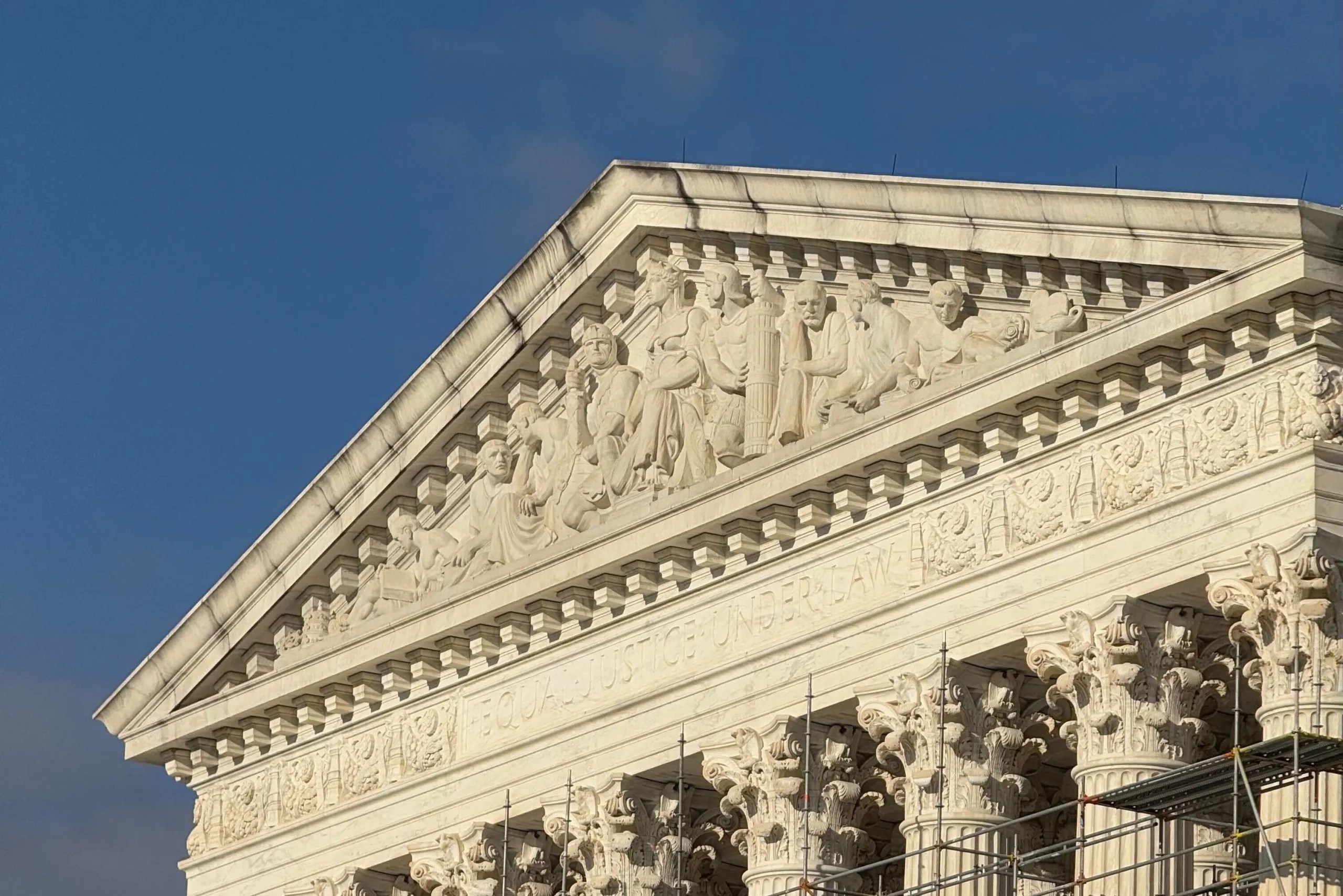
(Katie Barlow)
Happy New Year! SCOTUStoday will be back in your inboxes (and we will resume our regular programming) on Monday, Jan. 5.
SCOTUS Quick Hits
- Chief Justice John Roberts is expected to release a year-end report on the federal judiciary today. Amy will be reporting on it.
Morning Reads
- Federal Judge Blocks Deportations of South Sudanese Migrants (Tim Balk, The New York Times)(Paywall) — A federal judge on Tuesday “blocked the Trump administration from ending temporary deportation protections for migrants from South Sudan,” according to The New York Times. The decision came “a week before the migrants’ status was set to expire.” In a previous case on deportation protections, “the Supreme Court cleared the way for the government to end [Temporary Protected Status] for more than 300,000 people from Venezuela after a monthslong legal battle.”
- Trump administration agrees to review stalled NIH research grants after lawsuit (Dietrich Knauth, Reuters) — Nearly a year after the Trump administration terminated grants that it tied to “diversity, equity and inclusion initiatives” and four months after the Supreme Court weighed in on the resulting lawsuit and ruled “that legal battles over the terminated grants should be handled by a different court that specializes in monetary disputes with the government,” the administration has agreed “to conduct new reviews of grant applications that were frozen, denied, or withdrawn” during the legal battle, according to Reuters. “The agreement does not require NIH to fund any particular research proposal.”
- The Supreme Court has taken the National Guard away from Donald Trump (The Economist)(Paywall) — The court’s Dec. 23 decision against the Trump administration in a dispute over federalizing and deploying the National Guard in Illinois “narrows [President Donald Trump’s] remaining legal paths to mobilise troops and send them to cities,” according to The Economist. Among other options, Trump could use the Insurrection Act, which enables “presidents to use troops against ‘unlawful obstructions, combinations, or assemblages, or rebellion’ serious enough that states cannot handle them through the ‘ordinary course of judicial proceedings,'” to order future deployments. But “[m]ost presidents have agreed that only extraordinary situations should call for its invocation, because, as Nicholas Katzenbach, a deputy attorney-general, wrote in 1964, the deployment of federal troops may ‘aggravate the emotions of the populace or alienate local law enforcement officials.’”
- Why Trump’s EEOC wants to talk to White men about discrimination (Taylor Telford, The Washington Post)(Paywall) — Under Trump, the Equal Employment Opportunity Commission, which “is charged with enforcing federal laws that make it illegal to discriminate against a worker or job applicant on the basis of race, sex, religion, age, disability and other factors,” is prioritizing different types of discrimination cases than it has in the past by “focus[ing] on stamping out ‘illegal discrimination’ stemming from diversity, equity and inclusion (DEI) programs” and placing a “heightened emphasis” on issues like religious bias, according to The Washington Post. “One of the EEOC’s biggest pivots under Trump is to abandon cases filed under disparate impact, a legal theory that holds that seemingly neutral policies — such as height or lifting requirements — can have discriminatory outcomes.”
- CBS reporter calls it ‘patently false’ and ‘dangerous’ to claim Supreme Court is ‘corrupt’ (Lindsay Kornick, Fox News) — During an appearance on CBS’ “Face the Nation,” Jan Crawford, CBS News’ chief legal correspondent, “criticized the mainstream media’s coverage of the Supreme Court, calling it ‘dangerous’ to claim the high court was ‘corrupt,'” according to Fox News. “This is a conservative Supreme Court. It has been a conservative Supreme Court for 20 years. People can disagree and do disagree with their opinions, but it’s profoundly wrong to call it or say ‘corruption’ where there, in fact, is none,” Crawford said.
On Site
From Amy Howe

The Supreme Court and whether the Fed is special
On Jan. 21, the court will hear arguments in the case of Lisa Cook, a member of the Federal Reserve’s Board of Governors whom President Donald Trump has attempted to fire. The case raises important questions about the Fed’s independence, which Amy explored in her latest analysis.
Contributor Corner

Hamm v. Smith and the future of capital punishment
In his first Capital Matters column, Jordan Steiker explored potential reasons why the Supreme Court has spent so much time in recent years on a capital case that, at least at first blush, appears to be the kind of fact-intensive dispute that the justices typically avoid.
Posted in Featured, Newsletters
Recommended Citation:
Kelsey Dallas,
SCOTUStoday for Wednesday, December 31,
SCOTUSblog (Dec. 31, 2025, 9:00 AM),
https://tools-survey.info/2025/12/scotustoday-for-wednesday-december-31/