A mid-term update on criminal law at the Supreme Court

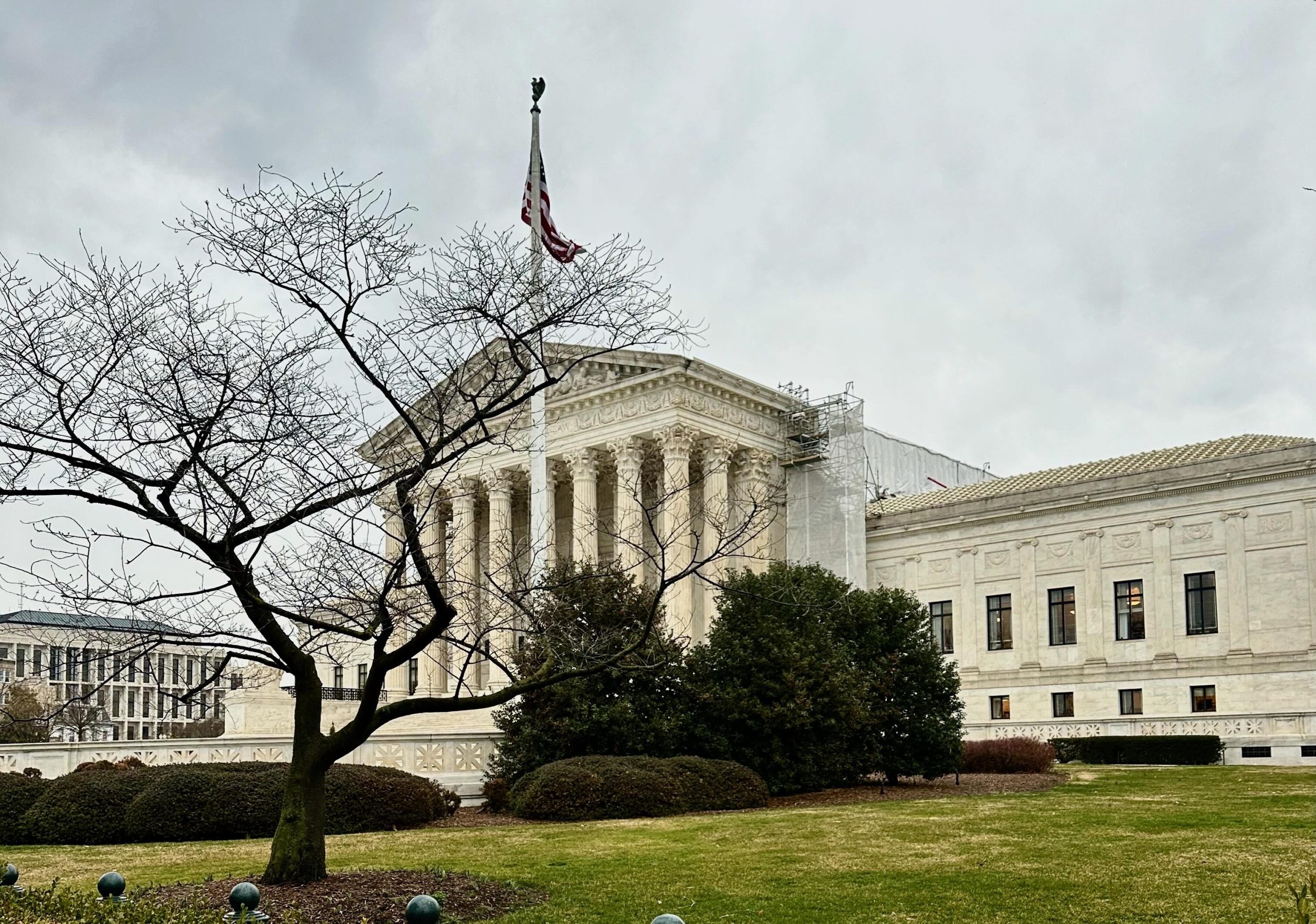
ScotusCrim is a recurring series by Rory Little focusing on intersections between the Supreme Court and criminal law.
A lot has happened on the Supreme Court’s docket since my September preview, including six criminal law opinions on the merits (two by summary reversal – that is, without additional briefing and oral arguments), and 29 new grants of review (certiorari). Eight separate writings of individual justices in criminal cases have also appeared on the “Orders” docket. And of course last week saw oral arguments about Hawaii’s private-property-versus-gun-rights law. I should also mention two significant full court decisions on the interim docket that have “related to criminal law” implications: Trump v. Illinois (decided on Dec. 23, addressing Trump’s deployment of the National Guard in Chicago) and Noem v. Vasquez-Perdomo (decided on Sept. 8, addressing immigration detentions in Los Angeles, about which I wrote critically at the time).
With over half the term gone by, about half of the 58 cases in which the court has now granted review for the 2025-26 term present (by my broad definition) either criminal law questions or questions related to criminal law. The criminal law cases already decided, or added to the docket, since my pre-term preview are briefly summarized below.
Today’s column is informational rather than opinionated (for the most part) and presents short descriptions rather than lengthy analysis. As the court issues more final decisions, I expect that more analysis will come. (Meanwhile, you have no idea how many clicks putting in all the hyperlinks in this column takes.)
Decided cases
The court has now issued six decisions in criminal cases. The initial 9-0 vote count in five of the six is not unusual for the start of the merits docket – the “easy” decisions usually come first. Four of the six opinions favored the criminal defendant. Most intriguing are a few concurring opinions.
Case v. Montana (Jan. 14), Fourth Amendment
The justices unanimously endorsed a standard for warrantless entries into a home for law enforcement to provide “emergency aid,” rather than to search for criminal evidence. According to the court, law-enforcement officials need an “‘objectively reasonable basis for believing that someone inside needs emergency assistance,” which is different from “probable cause” or “reasonable suspicion” to investigate possible crimes. (Precisely how it differs remains to be settled, I think, in a future case.)
Most interesting in Case is Justice Neil Gorsuch’s short concurrence, in which he attacks what he calls “the miasma” and “confusion” created by the “reasonable expectation of privacy” standard that originated in the 1967 case of Katz v. United States. Gorsuch took his seat after the unexpected death of Justice Antonin Scalia, whom Gorsuch praised as a “towering” figure and a “lion of the law.” Gorsuch predicted that Scalia’s approach to “the judicial role … will endure.” Yet in 2001 in a case called Kyllo v. United States, it was Scalia writing for the court who faithfully applied the Katz privacy analysis to rule that using technology outside of a house to monitor heat emanating from inside the house (to detect a suspected drug lab) was a Fourth Amendment “search” subject to the warrant requirement. Does Gorsuch’s Case concurrence portend that he will part ways with his professed mentor?
Barrett v. United States (Jan. 14), Double jeopardy
Justice Ketanji Brown Jackson authored this unanimous decision, in a somewhat complicated federal statutory context. Imposing two convictions – one for a violation of a statute prohibiting possession of a gun in connection with a federal crime of violence and one for a violation of that same statute that also “causes … death” – violates the Fifth Amendment’s prohibition against being “twice put in jeopardy” for “the same offense.” Both provisions have “the same elements” under the court’s 1932 decision in Blockburger v. United States, so they meet the court’s “same offense” standard. Because the court determined that Congress has not “clearly manifested” an intention to impose two separate convictions here, however, the two-conviction judgment below was reversed. (The question “whether Congress could” constitutionally authorize two convictions was reserved in a footnote.)
As in Case, Gorsuch wrote separately to note doctrinal “confusion,” this time regarding concurrent versus successive prosecutions for lesser and greater offenses. He’s right about that, I think. But he also says that a concurrent prosecution “for greater offenses and their lesser included variants” are “no double jeopardy problem … so long as the court does not enter judgments of conviction on both.” Perhaps the difference is one trial versus two, giving dispositive power to the word “twice” in the Fifth Amendment (that is, no person shall “be subject for the same offense to be twice put in jeopardy of life or limb”). But why doesn’t a single trial for two “same offense” crimes itself constitute being “twice put in jeopardy,” especially if one variation of the crime permits introduction of evidence that the other might not? Gorsuch is right that “courts often tolerate the practice,” but such toleration does not settle the constitutional question.
Ellingburg v. United States (Jan. 20), Ex post facto laws
An easy unanimous decision: “restitution is criminal punishment” when imposed as a mandatory part of a criminal sentence. For that reason, in line with the ex post facto clause of the Constitution, courts may not be able to impose restitution (the case is remanded with the court’s usual closing phrasing “for further proceedings”) as part of a federal sentence for a crime that occurred before the law at issue was passed by Congress in 1996.
Justice Brett Kavanaugh’s opinion was only five pages. Justice Clarence Thomas agreed with “the Court’s opinion in full,” but (joined by Gorsuch) he added 17 pages of historical analysis to suggest that the court has strayed far from the rationale of its first ex post facto opinion, 1798’s Calder v. Bull. Thomas “would restore Calder’s approach” and reconsider “what laws would have been subject to the ex post facto clause,” including “[m]any laws that are nominally civil today.”
Bowe v. United States (Jan. 9), Federal habeas corpus
A very complicated and technical 5-4 decision, ruling that federal prisoners are not barred from filing “successive” (that is, repeated) petitions for post-conviction relief even though state prisoners are, and that the court has jurisdiction to reach that question. Gorsuch’s dissent was joined by Thomas and Alito, as well as by Justice Amy Coney Barrett in part, making Chief Justice John Roberts and Kavanaugh the dispositive votes in addition to the court’s three regular “liberal” justices.
Clark v. Sweeney (Nov. 14), Habeas corpus
In Clark , the court summarily reversed, without any noted dissents, the grant of a new trial in a Maryland murder case, on the ground that “the Court of Appeals departed dramatically from the principle of party presentation” (a practice in which courts usually consider only arguments presented to them by the parties). Last month, I wrote critically about this decision, which seems to transform this “principle” into a dispositive rule. (Sidenote: court observers sometimes indicate that there were “no noted dissents,” to honor the idea that justices might silently “go along” with a decision even if they do not agree with it. How often such theoretical “dissent aversion” actually occurs, if at all, is unknown.)
Pitts v. Mississippi (Nov. 14), Confrontation clause
A five-page summary reversal of the Mississippi Supreme Court, which had affirmed a trial court’s ruling that screening a young child abuse victim from view when testifying at trial was “mandatory.” Again, no dissents were noted. Two prior Supreme Court decisions permit such screening “only if a court hears evidence and issues a case-specific finding of … necessity,” which did not happen here. Thus, the court held that the Sixth Amendment right of a criminal defendant “to be confronted with the witnesses against him” was violated.
Nine new criminal or criminal-law-related cases added to the docket since September
By my criteria, five of the new cases granted for review involve “pure” criminal law issues. Another four present questions which I think are “related” to criminal law.
Five new “pure” criminal law cases
Wolford v. Lopez (argued Jan. 20), Second Amendment
A Hawaii law makes it unlawful to carry a firearm on private property, even if that property is generally open to the public and the bearer is licensed to carry the firearm, unless the property owner has given express permission. Does that law violate the Second Amendment’s “right of the people to keep and bear Arms” because it effectively means that lawful gun carriers cannot engage in day-to-day activities like visiting gas stations or coffee shops without explicit consent? Or is it honoring the long-standing right of private property owners to exclude others from their property? Based on oral argument, the court appears poised to side with the challengers to Hawaii’s law. But as usual, the significant points will be in the nuances of separate justices’ opinions. Exactly how far will a majority go in describing the limits of gun laws within the meaning of the Second Amendment?
United States v. Hemani (scheduled for argument March 2), Second Amendment
Is the federal statute (18 U.S.C. § 922(g)(3)) that prohibits possession of a firearm by someone “who is an unlawful user of or addicted to any controlled substance” unconstitutional? Ali Danial Hemani may, for purposes of argument, concede marijuana use, but he was not under the influence when arrested or when carrying his weapon, factors that the U.S. Court of Appeals for the 5th Circuit has previously ruled are required. Last week’s oral argument in Wolford may shed some light on the arguments here, particularly regarding the use and limits of history (though a decision in Wolford before the oral argument seems unlikely).
Notably, the type of controlled substance in this particular case should be irrelevant to the Second Amendment question, even if the parties skirmish a bit on the point. The solicitor general’s petition for review said that “[t]his prosecution rests on respondent’s habitual use of marijuana” and presents the question presented as an “as applied to respondent” challenge. But the solicitor general also mentions use of cocaine and promethazine. Of potential interest: marijuana use is illegal in Texas (and under federal law), but has been decriminalized in over half of the states and the Trump administration has advocated changes to legalize “the medical use of marijuana.” We’ll see whether any of this comes up on March 2.
Hunter v. United States (scheduled for argument March 3), Appeal waivers in guilty pleas
This presents a longstanding and varied “split” among the federal courts of appeals. When criminal defendants have reached a “bargain” with the prosecution to plead guilty rather than go to trial (usually in exchange for some reduction in the charges), they are routinely asked, and regularly agree, to waive any appeal as part of the bargain (with an exception, perhaps, for an appeal argument that their lawyer has been ineffective or, sometimes, that the sentence imposed exceeds a statutory maximum). Moreover, some district judges later recite, when sentencing the defendant, that the defendant “has a right to appeal,” and some prosecutors fail to object to that line.
After entering such an agreement and pleading guilty, Munson Hunter filed an appeal challenging his sentence, but the 5th Circuit ruled that he had waived any such appeal and dismissed it.
Hunter’s petition for review says that that eight of the thirteen (or so) federal circuits have reached different conclusions regarding whether any implicit exceptions to such “appeal waivers” should be recognized (and whether a boilerplate statement that the defendant “has a right to appeal” renders a prior appeal waiver unenforceable). Both questions will be argued on March 3 (and you might especially enjoy hearing the feisty and experienced Supreme Court advocate Lisa Blatt arguing for Hunter).
Abouammo v. United States (argument likely in late March), Criminal venue
May a federal defendant be charged in a district where no conduct related to the offense occurred, if an effect of the conduct is contemplated in a different state? Here, California-based FBI agents visited Abouammo in Seattle, Washington; Abouammo then emailed them two false documents from Seattle, allegedly with intent to obstruct their California investigation.
Abouammo was charged, tried, and convicted in federal court in San Francisco for a false document crime “with the intent to impede, obstruct, or influence [an] investigation” under 18 U.S.C. § 1519. Section 2 of Article III of the Constitution provides that “[t]he Trial of all Crimes … shall be held in the State where the said Crimes have been committed.” Does the intent to impede a California investigation, which Abouammo allegedly had when he emailed the documents from his home in Washington, satisfy this constitutional requirement? The U.S. Court of Appeals for the 9th Circuit ruled that the “contemplated effects” of Abouammo’s conduct made a California venue proper. We shall see if the Supreme Court agrees.
Chatrie v. United States (April argument likely), Fourth Amendment
Are “geofence” warrants constitutional? Since the use of cellphones became ubiquitous, law enforcement officers have developed a practice of asking cell providers for information regarding what users are reported as being located at the specific time and place of a crime. In this case, a detective in Virginia submitted a sworn affidavit and a magistrate issued a warrant to Google, finding “probable cause” to examine the data of its many millions of users and, in a number of steps, produce a list of the specific time that specific users were in a particular location during a credit union robbery. The evidence produced by that “geofence” warrant led to the identification and subsequent conviction of Okello Chatrie. State and federal courts are split as to whether such warrants are a “general search” prohibited by the Fourth Amendment.
Four new cases “related” to criminal law
FCC v. AT&T, consolidated with Verizon v. FCC (likely April argument), Seventh Amendment right to jury trial in civil cases
The solicitor general is the petitioner – that is, the litigant seeking Supreme Court review – in the first case; the court granted review and consolidated the case for briefing and oral argument with a similar private petition filed by Jeff Wall, an experienced Supreme Court advocate.
The Seventh Amendment provides that “[i]n Suits at common law, where the value in controversy shall exceed twenty dollars, the right of trial by jury shall be preserved.” The federal Communications Act of 1934 authorizes the FCC to levy monetary penalties without a jury trial. If the target entity pays, it gets federal judicial review but no trial by jury. If the entity decides not to pay, it may then receive a jury trial in federal court if the government sues to collect the money. The 5th Circuit ruled against the government in AT&T, holding that the initial assessment of a penalty without the involvement of an Article III federal court violates the Seventh Amendment (and Article III), while the U.S. Court of Appeals for the 2nd Circuit ruled for the government in Verizon on the same issue.
Gorsuch has recently expressed concerns about the constitutional jury trial right in civil cases, concurring in 2024’s S.E.C. v. Jarkesy decision to ask the questions now granted review, and discussing it again in a statement regarding a denial of review earlier this term. My speculation is that his views have stimulated both the petitions and the grant of review in these cases.
Bondi v. Lau (April argument likely), Immigration law
The case appears to present a question about the timing of a finding of “inadmissibility” for a lawful permanent resident who has taken a trip abroad but has also committed a removable offense against the United States. The 2nd Circuit ruled that Lau was “improperly classified” by the government as “an applicant for admission” after he had been paroled into the United States two years earlier after a “brief trip” abroad while criminal charges were pending against him. The federal government’s petition for certiorari was granted on Jan. 9, but because the case was filed under federal secrecy rules, redacted filings have not yet been publicly linked on the court’s official docket (other than Lau’s opposition to that petition, publicly linked on Jan. 15).
Sripetch v. Securities Exchange Commission(April argument likely), Federal securities law
May the SEC seek equitable disgorgement without showing that individual investor-victims suffered pecuniary harm? The 9th Circuit ruled that it could, because disgorgement “is designed to deprive the wrongdoer of his ill-gotten gains,” so there is no need to show that the victim was harmed.
In this case, Sripetch pled guilty to criminal securities fraud and agreed to civil liability including disgorgement, but the “harm to victims” point was not addressed in that agreement. He later raised the issue, and the solicitor general agreed that a division among the federal courts of appeals on the question deserves review in this case. So here we are.
Cisco Systems, Inc. v. Doe I (April argument likely), Implied or private rights of action
Falun Gong practitioners filed suit seeking damages against Cisco under two federal laws: the Alien Tort Claims Act and the Torture Victim Protection Act. They alleged that Cisco had aided and abetted torture against them or their relatives in China by developing surveillance and other systems used to locate the plaintiffs. Cisco filed a petition for certiorari from the 9th Circuit’s ruling allowing the case to go forward, and (in response to a request from the court for the government’s views) the solicitor general agreed that the question whether either statute allows private lawsuits for aiding and abetting deserves review by the justices.
Trump v. Barbara (March or April?), Birthright citizenship and immigration law
Does the current president’s executive order, issued the day he was inaugurated, contravene the first sentence of the 14th Amendment, which states that “All persons born or naturalized in the United States, and subject to the jurisdiction thereof, are citizens of the United States and of the State wherein they reside”? The solicitor general argues that citizenship does not automatically descend upon “children of … illegal aliens.” Numerous federal courts have ruled that the court’s 1898 ruling in United States v. Wong Kim Ark says otherwise.
Opinions regarding dissents from denials of certiorari (review) by the court
In a separate section of its website entitled “Opinions Relating to Orders,” the court collects, among other things, separate opinions of justices issued when it as a body denies an application for a stay of a judgment (for example, an impending execution), or denies a petition for review of a case. (A shorthand term for such orders is “dissents from denials,” although sometimes a separate writing is designated a “statement” or “statement respecting” a denial, when a justice agrees with the decision to deny review but nonetheless writes an opinion outlining his or her views.) In fact, this part of the court’s website is a grab bag of different types of cases; some of the other rulings here comprise the “interim” (sometimes called “emergency” or “shadow”) docket that has received so much recent attention.
By my count, eight of the twelve separate cases listed in the court’s Orders section are “criminal law or related.” But this column is already too long to detail them; you’ll have to look for yourself or wait for my Annual Summary of Criminal Cases published by the ABA every August.
Posted in Featured, Recurring Columns, ScotusCrim
Cases: Wolford v. Lopez, Hunter v. United States, Pitts v. Mississippi, United States v. Hemani, Ellingburg v. United States, Bowe v. United States, Barrett v. United States, Case v. Montana, Cisco Systems, Inc. v. Doe I, Chatrie v. United States, Trump v. Barbara (Birthright Citizenship), Federal Communications Commission v. AT&T, Inc., Bondi v. Lau, Sripetch v. Securities and Exchange Commission, Abouammo v. United States, Clark v. Sweeney