No tariff opinion

“These aren’t the droids you’re looking for.”
A couple of years ago, the Supreme Court shifted the one “non-argument day” it holds for almost every argument session sitting to the Friday before the session starts, instead of the Monday after the two weeks of arguments. Such days often just involve the justices taking the bench for a few minutes to admit new lawyers to the Supreme Court bar. But when opinions in argued cases are ready, those non-argument days can become opinion days.
So when the court put the word out that opinions were possible during Friday’s non-argument session, many in the legal community (and beyond) got excited. Two pending cases in particular drew the most anticipation, Louisiana v. Callais, the Voting Rights Act case with potential implications for the 2026 election cycle; and (most of all) Learning Resources v. Trump, a challenge to the president’s tariff policies. Callais was argued Oct. 15, while the tariff case argument was Nov. 5.
To be fair, when I say people got “excited,” I mean that advocacy groups, law school PR folks, legal media, and others began issuing anticipatory articles and press releases, touting the availability of their experts to offer analysis of the opinions. One law school putting forward a well-known professor confidently led its press release with this: “On Friday, the Supreme Court will rule on the legality of President Trump’s global tariffs.”
This is the kind of hype we normally see more of in June, when the court has many big decisions pending and some groups claim to know that a certain decision is coming down on a given day. They’re usually wrong.
Yet despite the hype, the courtroom is not very crowded for the non-argument session. The public section is half full at best, and the bar section is empty – and I mean empty – except for the half-dozen or so members of the Pennsylvania Bar Association who will be sworn into the Supreme Court Bar, along with their sponsor. (The non-argument days often feature multiple groups, but not today.)
A few minutes before 10 a.m., Solicitor General D. John Sauer enters the courtroom with five or six of his lieutenants, including Principal Deputy Solicitor General Hashim Mooppan, who argued part of Callais. Sauer argued the tariff case. This is notable because Sauer has not followed the solicitor general’s practice of attending opinion announcements. As we noted several times last spring, Sauer evidently had other business on opinion days in May and June, though he made it to a few. So his presence perhaps suggests that he thinks something big may be coming down.
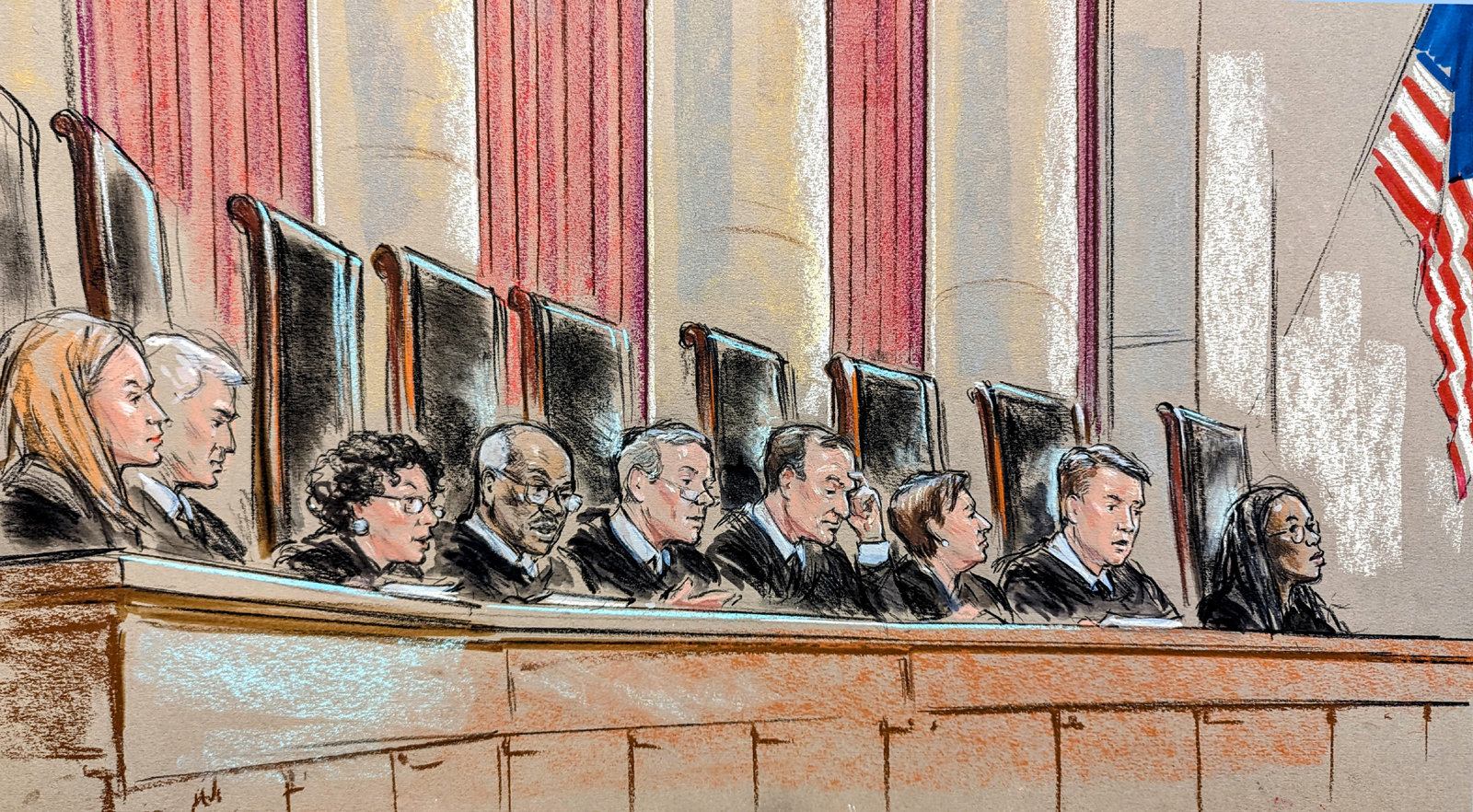
When the justices take the bench, all are present and looking refreshed after the lengthy holiday recess. Chief Justice John Roberts then announces that Justice Sonia Sotomayor has “the opinion” of the court today. It’s Bowe v. United States, a rather technical case about successive habeas petitions.
Before she gets to her summary, Sotomayor looks out at the courtroom, and at the solicitor general’s staff that is filling the seats at the counsel tables on each side of the lectern.
“Seeing who’s here, it’s not the case you thought,” she says in a quick deadpan aside.
There are chuckles throughout the courtroom, including a loud one coming from the press section. Sauer has a somewhat nervous looking smile, and his colleagues trade some grins.
Sotomayor turns to a concise summary of the opinion, which is a victory for the inmate.
Perhaps because I watched too many Star Wars marathons on cable over the holidays, what comes to my mind is an imperfect metaphor: “These aren’t the droids you’re looking for,” Sotomayor seems to be telling Sauer.
After the bar admissions, the entire session is over in a matter of minutes. The court has indicated the possibility of opinions next Wednesday, an argument day. So perhaps we’ll get tariffs then. Or not.
More opinions could come also in the second week of the January sitting.
Meanwhile, the next non-argument day on the court’s calendar is Friday, Feb. 20.
May the force be with you.
Cases: Louisiana v. Callais (Voting Rights Act), Louisiana v. Callais, Learning Resources, Inc. v. Trump (Tariffs)