SCOTUStoday for Thursday, January 29

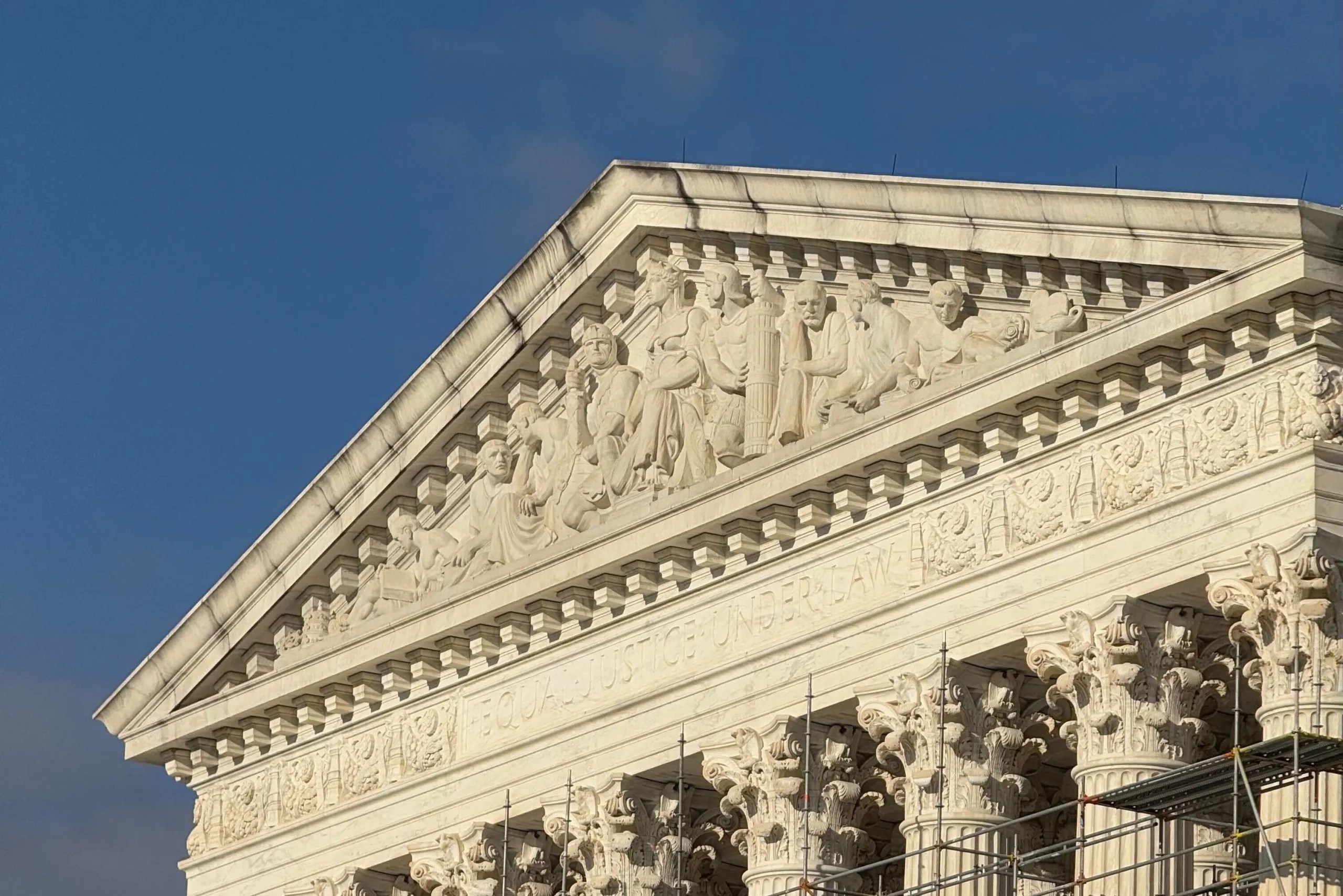
Yesterday was Justice Amy Coney Barrett’s birthday. Barrett, now 54, is the youngest current justice.
Plus, a reminder: we’re hiring! We’re looking for an editor to oversee a new daily newsletter for commercial litigators and corporate counsel that highlights circuit court decisions, relists, denials, en banc grants, and notable dissents.
SCOTUS Quick Hits
- The court on Wednesday denied a stay of execution requested by Charles Victor Thompson, who was sentenced to death after being convicted of killing his ex-girlfriend and her new boyfriend. Hours later, Thompson was executed in Texas.
- Last week, a group of California Republicans asked the court on its interim docket to block the state from using its redistricting map in this year’s elections. California officials’ response to that request is due today by 4 p.m. EST.
- An interim docket case on California’s policies regarding parental notification when public school students choose to use different pronouns or a different gender identity is fully briefed, and the court’s decision could come at any time.
- The court has not yet indicated when it will next release opinions. If the court follows its typical pattern, the earliest the next opinion day may be is Friday, Feb. 20, the day of the court’s next session.
- The court will next hear arguments on Monday, Feb. 23, the first day of its February sitting.
Morning Reads
- Federal Reserve holds interest rates steady at its first FOMC meeting of 2026 (Aimee Picchi, CBS News) — The Federal Reserve on Wednesday announced “that it is leaving its benchmark interest rate unchanged, marking the central bank’s first pause after three consecutive rate cuts last year,” according to CBS News. The decision “comes amid a Department of Justice investigation into [Fed Chair Jerome] Powell linked to his congressional testimony last year about ongoing renovations at several Fed buildings. The Supreme Court is also currently weighing whether to allow Fed Governor Lisa Cook to keep her job after Mr. Trump sought to fire her.”
- Fed’s Powell says he attended Supreme Court arguments over Cook due to case’s importance to Fed (Reuters)(Paywall) — During a press conference on Wednesday following the Fed’s meeting about interest rates, Powell explained “that he attended last week’s Supreme Court arguments over President Donald Trump’s effort to fire Fed Governor Lisa Cook because of the case’s importance to the U.S. central bank,” according to Reuters. “I would say that that case is perhaps the most important legal case in the Fed’s 113 year history. And I, as I thought about it, I thought it might be hard to explain why I didn’t attend it,” Powell said.
- Donald Trump Floats Name for New Supreme Court Justice (Gabe Whisnant, Newsweek) — During an event on Wednesday, President Donald Trump discussed the possibility of nominating Sen. Ted Cruz to fill a future Supreme Court opening, joking that Democrats and Republicans alike would support that move, according to Newsweek. “He’s a brilliant legal mind. He’s a brilliant man,” the president said. “If I nominate him for the United States Supreme Court, I will get 100 percent of the vote. The Democrats will vote for him because they want to get him the hell out [of the Senate]. And the Republicans will vote for him because they want to get him the hell out, too.”
- Alabama House votes to extend death penalty to child sexual assault (Andrea Tinker, Alabama Reflector) — The Alabama House of Representatives has passed “a bill that would allow prosecutors to seek the death penalty for those convicted of sexual assault of a child under the age of 12,” according to the Alabama Reflector. The bill’s sponsor, Rep. Matt Simpson, “a former child crimes prosecutor, said the bill was part of a broader national effort to overturn Kennedy v. Louisiana, a 2008 U.S. Supreme Court ruling that prohibited capital punishment for child rape.” The bill now moves to the Alabama State Senate. A similar measure passed the Alabama House last year “but did not make it to the Senate floor.”
- Yale Offers Free Tuition to Families With Incomes Under $200,000 (Stephanie Saul, The New York Times)(Paywall) — On Tuesday, Yale University announced that tuition will be waived for students from families with annual incomes below $200,000 beginning with “the class that will enroll in the fall,” according to The New York Times. “The beefed-up financial aid follows the Supreme Court’s 2023 decision limiting what universities may do to recruit racially diverse student bodies. The schools hope to continue to attract diverse applicants by stepping up financial aid, since race and income are often correlated.”
A Closer Look: Suncor Energy Inc. v. County Commissioners of Boulder County
In Suncor Energy Inc. v. County Commissioners of Boulder County, the Supreme Court has another opportunity to weigh in on an effort to use state-level tort claims to hold energy companies financially accountable for the alleged community-level costs of climate change. The justices denied a very similar petition for review a year ago, but the federal government has changed its position on the issue since then and is now calling on the court to weigh in.
The pending petition stems from a lawsuit brought by officials in the Boulder, Colorado, area against Suncor Energy and Exxon Mobil, which describe themselves as “energy companies that produce and sell fossil fuels.” Boulder officials contend that the companies knowingly contributed to climate change and misled the public about the link between their work and climate change. They are seeking financial damages from the companies under state law for the problems created in Boulder and the surrounding county by shifts in the global climate.
As Suncor Energy and Exxon Mobil noted in their petition for review, Boulder is far from the only community to have filed such a lawsuit. “Energy companies that produce and sell fossil fuels are facing numerous lawsuits in state courts across the Nation seeking billions of dollars in damages for injuries allegedly caused by the contribution of greenhouse-gas emissions to global climate change,” they wrote. That’s one reason why the companies feel Suncor Energy is worthy of the court’s attention; they say it could bring clarity to many other ongoing disputes.
The actual question raised in the Suncor Energy petition focuses on federal preemption. Specifically, the companies have asked the court to decide “[w]hether federal law precludes state-law claims seeking relief for injuries allegedly caused by the effects of interstate and international greenhouse-gas emissions on the global climate.” The companies contend that it does and such claims under state tort law thus cannot be brought, but in May 2025 the Colorado Supreme Court rejected that assertion, allowing the case to proceed.
In September, the federal government filed a friend-of-the court brief in support of Suncor Energy and Exxon Mobil without being asked by the Supreme Court to address the petition for review. U.S. Solicitor General D. John Sauer contended that “[b]oth the Constitution and the Clean Air Act … bar the state-law claims in this case,” and urged the justices to overturn the Colorado Supreme Court’s decision. Twenty-six states, the U.S. Chamber of Commerce, and 103 members of Congress, among others, have also filed friend-of-the-court briefs in support of the energy companies’ position.
At first, Boulder city and county officials waived their right to respond to the petition, but the court requested a response. In their brief, filed in November, they argued that the case is still at an early stage and that granting cert at this point “would require the Court to wade into a thicket of preliminary questions that promise nothing but rabbit holes and dead ends.” They further contended that “[t]here is no constitutional bar to states addressing in-state harms caused by out-of-state conduct.”
Suncor Energy was first considered by the justices at their private conference on Friday, Dec. 12. The petition has since been relisted four times, and it will next be considered at the justices’ conference on Friday, Feb. 20.
SCOTUS Quote
“Words uttered under coercion are proof of loyalty to nothing but self-interest.”
— Justices Hugo Black and William Douglas in West Virginia State Board of Education v. Barnette
On Site
From the SCOTUSblog Team

Justices to consider whether to weigh in on $5 million verdict against Trump at next conference
When the justices hold their private conference on Friday, Feb. 20, the petitions for review they are slated to consider will include one from President Donald Trump, asking the court to weigh in on the 2023 verdict against him in a civil suit brought by E. Jean Carroll. Trump calls the lawsuit “facially implausible” and “politically motivated”; Carroll urges the court to deny Trump’s petition, telling the justices that the verdict would stand regardless of their ruling.
Contributor Corner

Introducing the Interim Relief Docket Stat Pack
For years, scholars and commentators have tracked the Supreme Court’s merits docket through detailed statistical analyses, including SCOTUSblog’s Stat Pack. But the court’s “other docket,” often called the interim relief or emergency docket, has received far less systematic attention. Taraleigh Davis is helping change that with her Interim Relief Docket Stat Pack, which was released by SCOTUSblog on Wednesday.

Second Amendment jurisprudence is a mess
In his latest Courtly Observations column, Erwin Chemerinsky explained why he believes the Supreme Court has made a mess of the law concerning the Second Amendment, and why he also believes that the two cases on the docket this term regarding gun laws likely will exacerbate, not clear up, the confusion.
Posted in Featured, Newsletters