SCOTUStoday for Tuesday, January 20

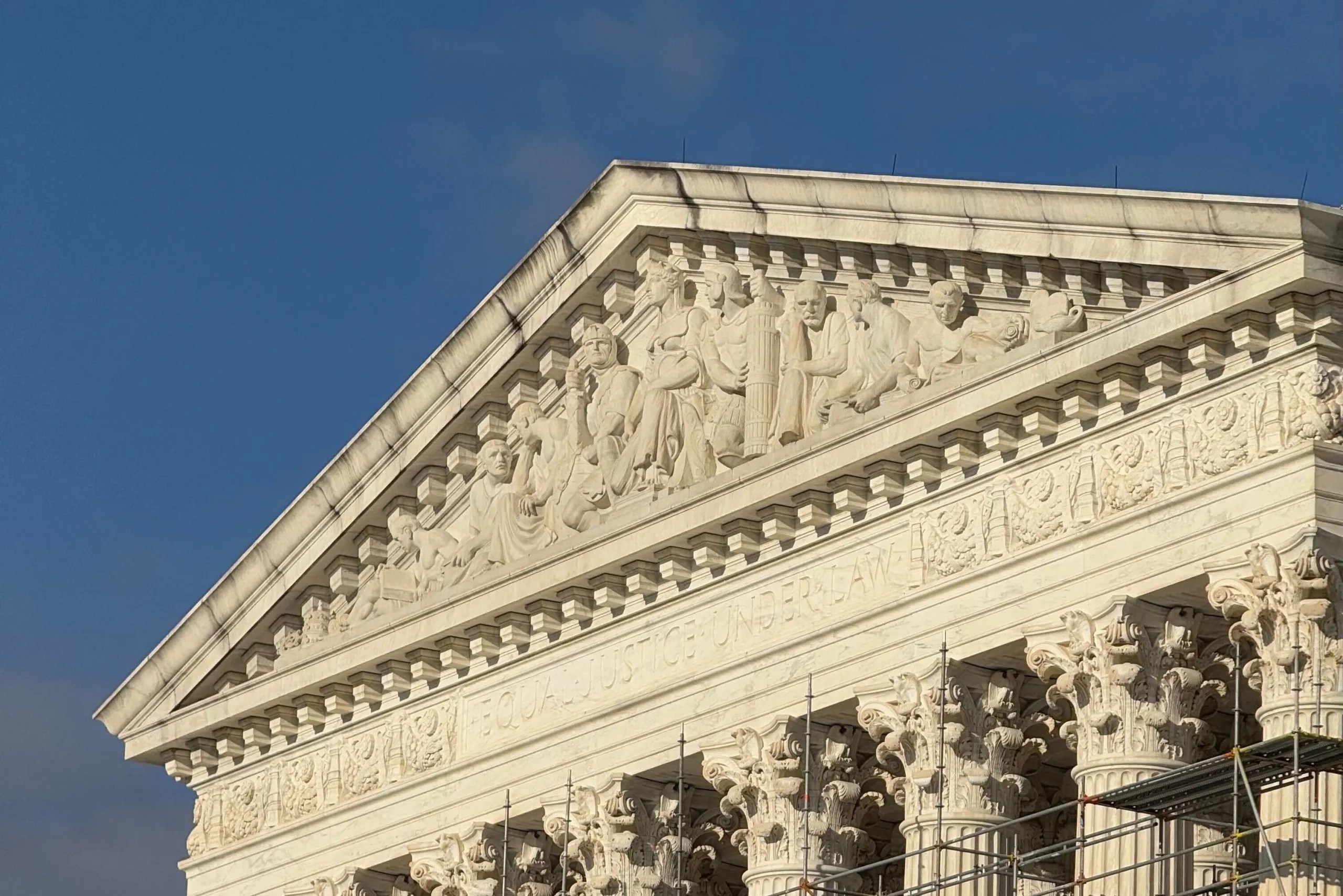
Welcome to the Supreme Court’s third opinion day in less than two weeks. We will be live blogging beginning at 9:30 a.m. EST.
Plus, a reminder: we’re hiring! We’re looking for an editor to oversee a new daily newsletter for commercial litigators and corporate counsel that highlights circuit court decisions, relists, denials, en banc grants, and notable dissents.
SCOTUS Quick Hits
- On Friday, the court announced that it had granted review in four cases. For more on these cases, see the On Site section below.
- Today, the court is expected to release an order list at 9:30 a.m. EST with, among other things, petitions for review that have been denied.
- As noted above, the court has indicated that it may release opinions this morning at 10 a.m. EST. We will be live blogging any opinion announcements beginning at 9:30.
- After any opinion announcements(s), the justices will hear oral arguments in Wolford v. Lopez, on a Hawaii law that bans gun owners from bringing their guns onto private property that is open to the public without specific permission from the property’s owner, and M&K Employee Solutions, LLC v. Trustees of the IAM Pension Fund, on how to calculate what a business owes if it withdraws from a multi-employer pension plan.
- Tomorrow, starting at 9:30 a.m. EST, we will be live blogging as the court hears oral argument in Trump v. Cook, on President Donald Trump’s effort to remove Lisa Cook as a member of the Federal Reserve Board of Governors. On Monday, the Associated Press reported that Federal Reserve Chair Jerome Powell will attend Wednesday’s argument, citing an anonymous source.
Morning Reads
- Treasury secretary defends Greenland tariffs: ‘The national emergency is avoiding the national emergency’ (Megan Lebowitz, NBC News) — During a Sunday appearance on “Meet the Press,” Treasury Secretary Scott Bessent defended President Donald Trump’s plan to use the International Emergency Economic Powers Act to impose new tariffs on “eight European countries that oppose [Trump’s] push to acquire Greenland,” according to NBC News. “[T]he national emergency is avoiding a national emergency,” Bessent said. “This is a geopolitical decision, and he is able to use the economic might of the U.S. to avoid a hot war.” The Supreme Court is currently considering whether IEEPA actually gives the president the authority to impose tariffs.
- Trump Can Reimpose 10% Levy if Supreme Court Strikes Down Tariffs, Hassett Says (Gavin Bade, The Wall Street Journal)(Paywall) — Kevin Hassett, director of the National Economic Council, said on Friday that the Trump administration is prepared to “backfill the things we’ve already achieved” if the Supreme Court strikes down a significant share of Trump’s tariffs, according to The Wall Street Journal. Initially, Hassett noted, the administration can reimpose 10% tariffs temporarily before “mov[ing] on to other, more lasting tariff authorities like Section 301 of the Trade Act of 1974, which covers discriminatory trade practices, or Section 232 of the Trade Expansion Act, which covers national security threats.”
- Tennessee man pleads guilty to repeatedly hacking Supreme Court’s filing system (Michael Kunzelman, Associated Press) — Nicholas Moore, 24, “pleaded guilty on Friday to hacking the U.S. Supreme Court’s filing system more than two dozen times,” according to the Associated Press. Specifically, he “pleaded guilty to one misdemeanor count of computer fraud,” and he is scheduled to be sentenced on April 17. “In 2023, Moore used stolen credentials to hack into the Supreme Court’s filing system on 25 different days, a court filing says. He accessed personal records belonging to the person whose credentials he used, then posted information about the person on an Instagram account using the handle ‘@ihackedthegovernment.'”
- Texas Schools Wait as Law on Ten Commandments Reaches Appeals Court (Pooja Salhotra, The New York Times)(Paywall) — The full U.S. Court of Appeals for the 5th Circuit will hear arguments today on laws in Texas and Louisiana that mandate the display of the Ten Commandments in public school classrooms. “Supporters are confident that the law will be upheld, pointing to the U.S. Supreme Court’s 2022 ruling that a high school football coach in Bremerton, Wash., could legally pray at the 50-yard line after his team’s games,” according to The New York Times. But a 5th Circuit panel and federal courts in Texas and Louisiana have previously “blocked the law on grounds that it violated the U.S. Constitution.”
- Why Is Congress Funding the Judiciary’s Support for Climate Plaintiffs? (Michael A. Fragoso, National Review) — In a post for National Review’s Bench Memos blog, Michael A. Fragoso criticized the Federal Judicial Center’s latest Reference Manual on Scientific Evidence, which includes an introduction by Justice Elena Kagan. The manual’s authors claim that it will “help judges reach an informed and reasoned assessment of [scientific] issues based on expert evidence that is faithful to the law and within the boundaries of scientifically sound knowledge,” Fragoso noted, before going on to argue that the manual is unfairly privileging the more liberal position in a variety of scientific debates, including the debate over climate change. He asked, “Why is the FJC doing this and why on earth is Congress paying for it?”
A Closer Look: The Insurrection Act
As protests persist in Minneapolis over Renee Good’s death and ICE operations in the city, President Donald Trump is weighing whether to send in the military. In a Truth Social post on Thursday, Jan. 15, Trump raised the possibility of invoking the Insurrection Act to send troops to the area to protect ICE agents. “If the corrupt politicians of Minnesota don’t obey the law and stop the professional agitators and insurrectionists from attacking the Patriots of I.C.E., who are only trying to do their job, I will institute the INSURRECTION ACT, which many Presidents have done before me,” the president wrote. He later clarified that such a move isn’t yet necessary. “I don’t think I need it right now,” Trump told reporters on Friday.
Trump’s comments came about three weeks after the Supreme Court blocked a different kind of deployment in Trump v. Illinois, an interim docket case centered on the president’s efforts to send the National Guard into Chicago. The court determined that Trump had not satisfied the conditions that must be met to invoke 10 U.S.C. § 12406, a statute that allows the president to “call into Federal service members and units of the National Guard of any State in such numbers as he considers necessary” to stop an “invasion by a foreign nation,” combat a “rebellion or danger of a rebellion” within the U.S., or “execute the laws of the United States.”
About a week after that decision was released, Trump announced that he was withdrawing the National Guard not only from Chicago, but also from Los Angeles and Portland, Oregon, the sites of other anti-ICE protests. As he did so, however, he warned that he was open to future deployments. “We will come back, perhaps in a much different and stronger form, when crime begins to soar again – Only a question of time!,” Trump shared on social media.
That Dec. 31 post called to mind Trump’s past comments on invoking the Insurrection Act to send troops to Chicago and other cities, as well as a footnote from Justice Brett Kavanaugh in his concurring opinion in Trump v. Illinois. In the footnote, Kavanaugh noted that, as he read it, the court’s opinion did “not address the President’s authority under the Insurrection Act,” and could actually “cause the President to use the U.S. military more than the National Guard to protect federal personnel and property in the United States.”
Kavanaugh’s footnote points to one difference between Section 12406 and the Insurrection Act, passed in 1807: While the former addresses the president’s authority to call National Guard troops into domestic federal service, the latter enables both the federalization of the National Guard and domestic deployments of the U.S. military. Another difference is that deployments under the Insurrection Act are not subject to the limitations outlined in the Posse Comitatus Act, which prohibits federalized troops from interfering with regular law enforcement activities. Under the Insurrection Act, troops can participate in such activities, including making arrests.
Additionally, the Insurrection Act allows for deployment under a broader range of circumstances by enabling the president to deploy troops domestically “[w]henever the President considers that unlawful obstructions, combinations, or assemblages, or rebellion against the authority of the United States, make it impracticable to enforce the laws of the United States.” “Impracticable to enforce” is a lower bar to clear than “unable … to execute,” the language used in Section 12406. And the phrase “[w]henever the President considers” would seem to explicitly defer to the president’s judgment on when the conditions for deployment have been met, which is one reason why legal experts describe the act as “highly permissive” and believe that deployments under the Insurrection Act could be difficult to challenge in court.
As Trump noted in his Jan. 15 social media post, many presidents have invoked the Insurrection Act to order deployments. But they often did so at the request of local officials, including in 1992, amid the Rodney King riots in Los Angeles. The last time the act was invoked without the consent of the relevant governor was during the Civil Rights Movement, when multiple presidents used it to send troops to the South to enforce desegregation orders.
SCOTUS Quote
“[N]othing is more certain than that beneficent aims, however great or well directed, can never serve in lieu of constitutional power.”
— Justice George Sutherland in Carter v. Carter Coal Co.
On Site
From the SCOTUSblog Team

Supreme Court takes up four new cases, including disputes on geofence warrants and Roundup weedkiller
The Supreme Court on Friday afternoon added four new cases to its Oral Argument Docket for the 2025-26 term, on topics ranging from the Fourth Amendment to federal preemption. Amy offered an overview of the four disputes.
Case Preview

Trump v. Cook: an explainer
The Supreme Court will hear oral argument on Wednesday in yet another battle over the president’s power to remove the heads of independent agencies. Trump v. Cook centers on President Donald Trump’s attempt to fire Lisa Cook, a member of the Federal Reserve’s Board of Governors.

How much does it cost to withdraw from a multiemployer pension plan?
Tuesday’s argument in M&K Employee Solutions v. Trustees of the IAM National Pension Fund presents a technical question of great monetary significance – how to calculate what a business owes if it withdraws from a multi-employer pension plan.
Opinion Analysis

Court unanimously holds that double jeopardy bars convictions for two firearm offenses
Richard Cooke analyzed the opinion in Barrett v. United States, in which the court, in an opinion from Justice Ketanji Brown Jackson, held that the Constitution’s double jeopardy clause prohibits a defendant from receiving two convictions for a single act that violates two closely related federal firearm offenses.
Contributor Corner

The Fed-firing case in three steps
In his latest Major Questions column, Adam White also dug into Trump v. Cook, spelling out why the case should be considered “half-baked” and what, exactly, the court has set out to decide.
Posted in Featured, Newsletters