SCOTUStoday for Tuesday, January 27
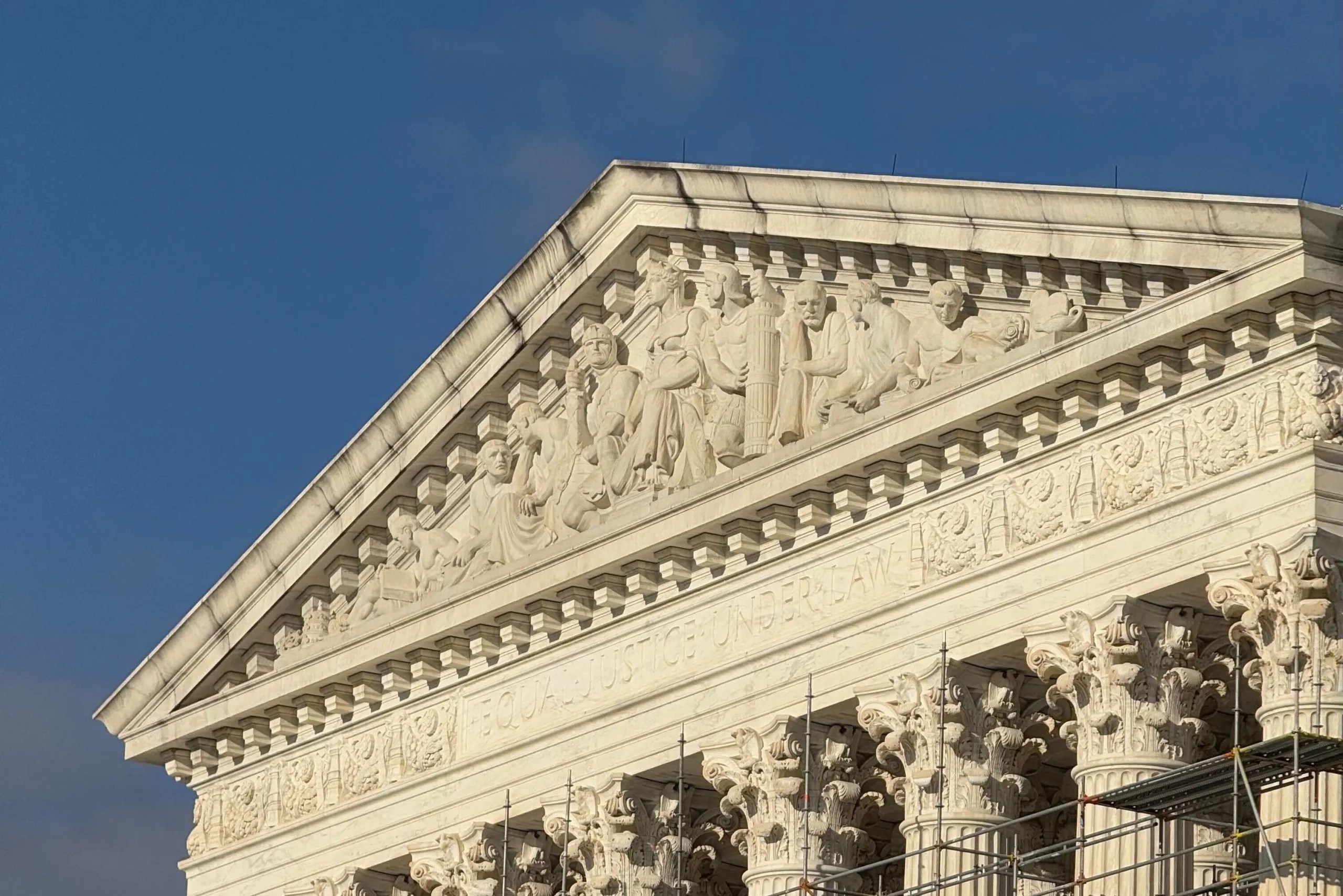
Today is Chief Justice John Roberts’ birthday. Born in 1955, Roberts has served on the Supreme Court since 2005.
SCOTUS Quick Hits
- On Monday, the court released an order list and announced that it will hear argument in Salazar v. Paramount Global, on the scope of the Video Privacy Protection Act.
- The order list also disclosed the justices’ summary reversal of the U.S. Court of Appeals for the 4th Circuit’s decision in Klein v. Martin, in which the Supreme Court held that the 4th Circuit had erred in ordering a new trial for a Maryland man convicted of attempted murder. Justice Ketanji Brown Jackson indicated that she would have turned down the petition for review, but she did not write separately to explain her vote.
- For more on these cases and Monday’s order list, see the On Site section below.
- The court has not yet indicated when it will next release opinions. If the court follows its typical pattern, the earliest the next opinion day may be is Friday, Feb. 20.
Morning Reads
- High Court Shouldn’t Weigh AI’s Copyright Author Status, US Says (Kyle Jahner, Bloomberg Law) — In a brief filed on Friday, the federal government urged the court “not to take up a computer scientist’s petition to consider whether AI could be an author under copyright law,” arguing that a “decision foreclosing nonhuman authorship … didn’t conflict with any in other circuits or raise complicated questions about protections for artificial intelligence-assisted work by human authors.” “The Copyright Office refused in 2019 to register an image [Stephen] Thaler submitted because his application listed a machine as the author. Thaler sued the office, but the US District Court for the District of Columbia and DC Circuit agreed human authorship was required,” according to Bloomberg Law.
- Meta, TikTok, YouTube to stand trial on youth addiction claims (Courtney Rozen, Reuters)(Paywall) — Trial begins this week in a young woman’s attempt to hold Meta Platforms, TikTok and YouTube liable for “fueling a youth mental health crisis,” according to Reuters. The “19-year-old woman from California, identified as K.G.M., … says she became addicted to the companies’ platforms at a young age because of their attention-grabbing design” and that her social media use “fueled her depression and suicidal thoughts.” Several other cases brought by young people who say they have suffered from “social media addiction” are also expected to go to trial this year, and the question of social media sites’ liability is expected to reach the Supreme Court eventually, “whether through K.G.M.’s case or another.”
- Judges, inundated with immigration cases, don’t mince words on ICE tactics (Kyle Cheney, Politico) — The Trump administration’s current deportation push in Minneapolis has led to “hundreds of emergency lawsuits from immigrants targeted by ICE,” according to Politico. As a result, federal judges in the area have been “working weekends to manage the backlog and juggling a crush of individual cases. … And in all but a handful of cases, those judges have ruled that the Trump administration violated the law, sometimes flagrantly.” These cases are part of a broader wave of lawsuits over “the Trump administration’s bid to lock up nearly everyone it is targeting for deportation,” rather than only “those deemed dangerous or likely to flee.” Politico noted that the “emergency nature of the cases has so far stymied efforts to get appeals courts or the Supreme Court to weigh in on the policy.”
- Supreme Court denies request from Ohio township facing $45M settlement (Laura A. Bischoff, The Columbus Dispatch)(Paywall) — On Monday, the Supreme Court denied an Ohio township’s request for it to review a $45 million judgment in favor of a man, Dean Gillispie, who successfully sued the township and its former detective for wrongful imprisonment. Miami Township has argued that “paying the tab could force it into bankruptcy,” because its “annual budget is $20 million,” according to The Columbus Dispatch. “Gillispie was wrongfully convicted in 1991 in the rape and kidnapping of twin sisters in one attack and a third woman in a second attack.” A jury awarded him the $45 million settlement after concluding that Miami township’s detective “violated Gillispie’s rights by hiding evidence that would have helped Gillispie’s defense and creating unfair lineup procedures for the victims.”
- The Supreme Court’s Unanimous Decisions Are Obscuring the Bigger Fights to Come (Madiba K. Dennie, Balls and Strikes) — In a column for Balls and Strikes, Madiba K. Dennie revisited the rulings released by the Supreme Court so far this month and highlighted the tension bubbling just under the surface of the five unanimous ones. In those cases, “[t]he justices repeatedly clashed over what factors the Court may consider when figuring out what a law means, from the language of the law to context clues to Founding-era history.” By the end of the term, Dennie predicted, those clashes will come to the fore and “shatter any remaining semblance of consensus.”
A Closer Look: The Justices’ Geographic Origins
When the Supreme Court first convened with six justices in 1790, President George Washington appointed three northerners and three southerners, establishing a pattern of geographic heterogeneity on the court.
Although today’s justices can, and often do, have ties to more than one state (think Justice Amy Coney Barrett, who was born in New Orleans, but could now be considered a Hoosier, having attended and taught at Notre Dame Law School), a judicial candidate’s “home state” has historically influenced their selection. Indeed, throughout American history, presidents were often “concerned with a nominee’s state of residence, seeking balanced representation from each region of the country” – and especially as tensions increased over the division of state and federal powers.
The Constitution itself has nothing to say on this. As such, justices can be foreign born (unlike presidents) – and in fact, six justices have been (though not for some time: the most recent foreign-born justice was Justice Felix Frankfurter, who came to the United States with his family from Vienna, Austria, at the age of nine).
As for within the U.S., 31 of the 50 states have produced at least one justice, although these states are skewed primarily towards the Northeast – one 2010 article states that just 11 of (then) 111 justices have been born in the 24 states west of the Mississippi River, attributing the tilt towards eastern states emerging earlier and their greater population density (a majority of the U.S. population has always lived east of the Mississippi), though this may not completely account for it.
Specifically, including all 116 justices, the greatest number of justices have come from New York (15); followed by Massachusetts and Ohio (nine each); Virginia (eight); Kentucky, Maryland, Pennsylvania, and Tennessee (tied with six each); and New Jersey (five).
Somewhat surprisingly, just four justices have been appointed from California, despite it being the U.S. state with the largest population (at least today) – and two of the four were Justices Stephen Breyer and Anthony Kennedy, who served at the same time. Only one justice has been appointed from Texas (Tom Clark), and none have come from Florida.
When she was confirmed in 2010, Justice Elena Kagan became the third justice from New York currently on the court. Kagan shares that home state with Justice Sonia Sotomayor and Chief Justice John Roberts. Justice Samuel Alito was born and raised in the Garden State, and Justices Ketanji Brown Jackson and Brett Kavanaugh are from Washington, D.C. That leaves Justices Clarence Thomas, from Georgia, and Neil Gorsuch, from Colorado – making them the only current justices, along with Barrett, who do not hail from the Mid-Atlantic.
SCOTUS Quote
“The more issues of law are inescapably entangled in political controversies, especially those that touch the passions of the day, the more the Court is under duty to dispose of a controversy within the narrowest confines that intellectual integrity permits.”
— Justice Felix Frankfurter in Joint Anti-Fascist Refugee Committee v. McGrath
On Site
From the SCOTUSblog Team

Supreme Court agrees to hear case on digital privacy, reverses ruling ordering new murder trial
The court on Monday morning agreed to weigh in on the interpretation of a federal law, enacted in the wake of Judge Robert Bork’s unsuccessful Supreme Court confirmation hearings, intended to protect videotape rental histories from public disclosure. The justices also reversed a ruling by a federal appeals court that had ordered a new trial for a Maryland man convicted of attempted murder.
Contributor Corner

A mid-term update on criminal law at the Supreme Court
In his latest ScotusCrim column, Rory Little highlighted key developments in criminal law that have unfolded at the Supreme Court since he last offered an overview on this topic in September.

Court to decide whether immigration agents can presume guilt
In his latest Immigration Matters column, César Cuauhtémoc García Hernández explained what’s at stake in Bondi v. Lau, a case that will be argued later this term on whether border officials can rely on criminal charges alone to decide that permanent residents have committed an offense that can allow the government to remove them from the country.
Posted in Featured, Newsletters