SCOTUStoday for Tuesday, January 6
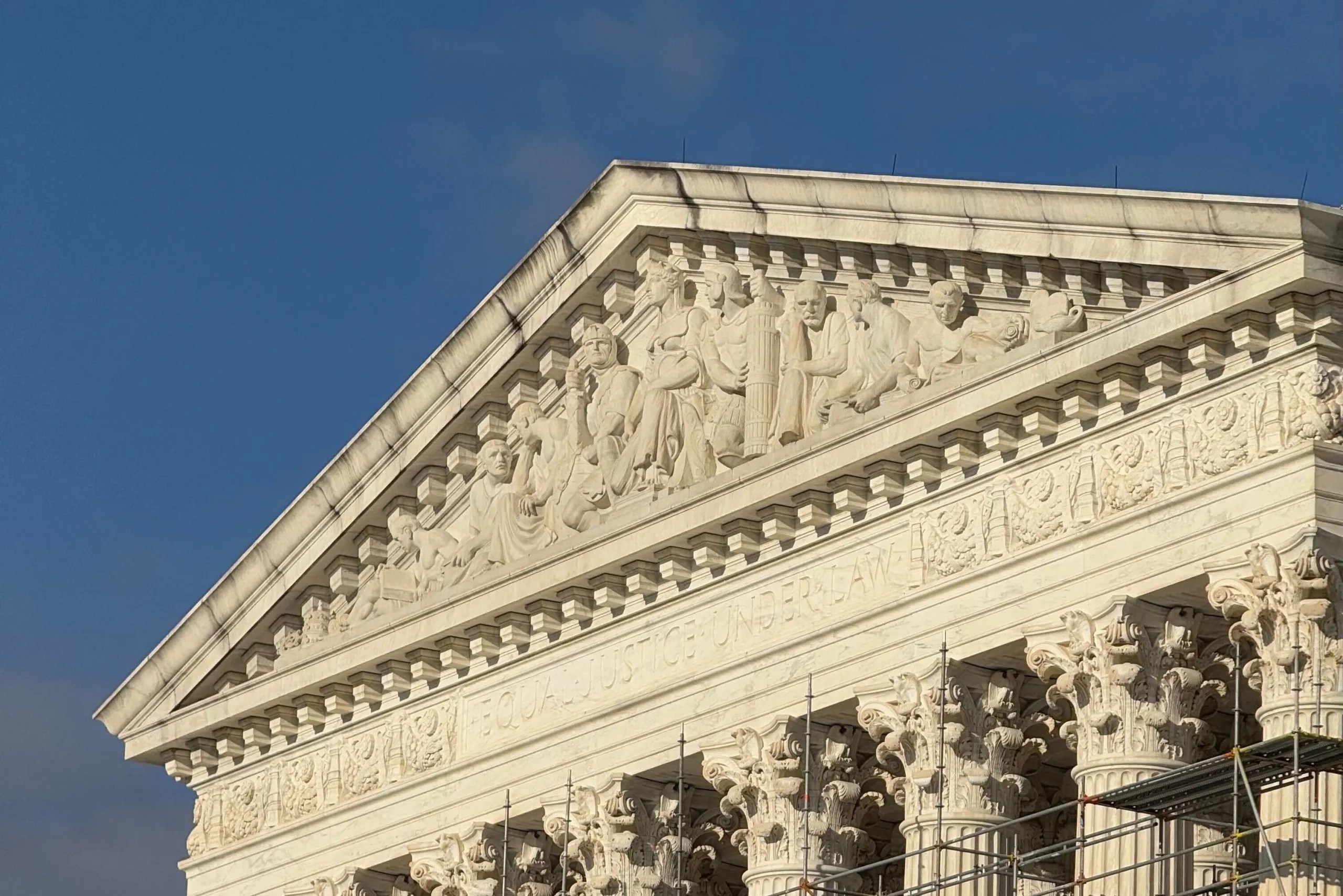
On this day in 1964, the Supreme Court began hearing argument in New York Times Company v. Sullivan, a landmark case on libel laws and the First Amendment. The court’s eventual ruling in favor of The New York Times has been in the news somewhat regularly in recent months as tensions have escalated between President Donald Trump and the press.
SCOTUS Quick Hits
- The court’s January argument session will begin on Monday, Jan. 12. The court will hear seven arguments over two weeks, including on transgender athletes; the latest chapter in the court’s gun rights jurisprudence; and President Donald Trump’s bid to remove Lisa Cook, a member of the Federal Reserve’s Board of Governors.
Morning Reads
- Louisiana will use challenged congressional map after Supreme Court declines to expedite ruling (Piper Hutchinson, Louisiana Illuminator) — After the Supreme Court announced in June that it would hear a second round of arguments on Louisiana’s challenged congressional map, the state pushed back its election deadlines in hopes of having enough time to redistrict after the court released its decision. Nearly three months after hearing argument in October, the court still hasn’t ruled, and Louisiana now plans to use its “existing six congressional districts … for the 2026 midterm election,” according to the Louisiana Illuminator.
- US abortion pill access under fire: Lawsuits and regulatory battles to watch in 2026 (Daniel Wiessner, Reuters) — The Supreme Court’s 2022 decision overturning the constitutional right to abortion has driven “a surge in medication abortion” and “a new wave of legal battles” over access to abortion drugs, according to Reuters. “Six Republican-led U.S. states in three separate pending lawsuits are seeking to curb access to mifepristone, the first of two pills used for medication abortion in the first 10 weeks of pregnancy.” Disputes are also developing over whether Republican-led states can prosecute doctors in other states for providing abortion drugs by mail.
- Supreme Court Increasingly Favors the Rich, Economists Say (Adam Liptak, The New York Times)(Paywall) — A new study “from economists at Yale and Columbia contends … that a good way to guess the outcome of a [Supreme Court] case is to follow the money,” according to The New York Times. Researchers concluded that the court rules in favor of wealthy parties more often today than it did in the past and that there’s “a growing partisan divide between the justices.” In decisions from 1953, according to the study, “Democratic and Republican appointees are statistically indistinguishable, deciding on average about 45 percent of the cases in favor of the rich.” But by 2022, “that share is about 70 percent for the average Republican justice and 35 percent for the average Democratic justice.” “Legal scholars had mixed reactions” to the study, per the Times, with some arguing that cases had been mischaracterized.
- Who is the Chief Justice’s Audience? (Steve Vladeck, One First) — In a post for his Substack, Steve Vladeck reflected on Chief Justice John Roberts’ latest year-end report, considering why Roberts chose not to directly confront recent attacks on judicial independence and to, instead, only subtly reference them. “[I]t seems fair to describe 2025 as a year of unprecedented assaults on the very constitutional structure and judicial independence the Chief Justice appears to be so invested in publicly defending. Against that backdrop, the fact that his year-end report doesn’t even indirectly allude to any of those assaults … is, frankly, inexcusable,” Vladeck argued.
- Supreme Court’s 2026 rulings could define America for decades to come (Ilya Shapiro, Fox News) — In a column for Fox News, Ilya Shapiro previewed upcoming cases on “equal protection, executive power and even the meaning of citizenship itself,” contending that decisions released in the next six months “will shape the legal and political landscape for years to come.” “Taken together,” Shapiro wrote, “the Supreme Court’s upcoming work reflects a federal judiciary charged with resolving the hardest questions of our constitutional order.”
A Closer Look: The Supreme Court’s “Customer Service” Ratings
While here at SCOTUSblog we analyze and explain the court’s rulings, a different (and somewhat less weighty) analysis of the court is happening across the internet. From the pages of Yelp to Google Maps, the court is treated like any other “business” … and its “customers” are, at times, rather displeased. We decided to dig in and see what, if anything, this tells us.
1. The Yelp Perspective: “Favorite building in D.C.”
The Yelp page for the Supreme Court (which we briefly mentioned in our closer look about courtroom lectures) often reads more like a political protest than anything else. With the court averaging a 4.3 out of 5 star rating, reviews typically fall into three categories:
- Organizational praises: Some laud the experience of being inside SCOTUS, from the self-guided tours to docent lectures and oral arguments (“DC’s version of gladiator matches”) to the building’s architecture. One added bonus, per reviews: the court doesn’t require tickets, so it’s a “great place to visit on a whim when you have some free time.” Some offer advice such as getting in line around 5 a.m. to secure a spot prior to an oral argument. One self-proclaimed SCOTUS nerd said although she doesn’t agree with all the court’s decisions, she was “smiling like an idiot and got goosebumps standing in front of the Supreme Court building.”
- Organizational critiques: Others negatively rate their experience at the court, complaining about the security lines, windowless cafeteria seating, and the unfriendly “bouncers” (aka members of the Supreme Court of the United States Police Department, who will – reportedly – yell at you if you’re on the back steps and not exiting). Another cited the issue that 1) there is no food or water allowed in the building and 2) the alternative, water in the cafeteria, is “overpriced.” “Given the shape of the court,” one individual wrote, the view “from anywhere but the front is not that great … unless you happen to be a member of the Supreme Court Bar, you can’t have the best seats.”
- Institutional critiques: Users also have used the star system to “vote” on recent rulings, providing comments like “all 9 should be ashamed of themselves … it is politically biased.” One person recommended firing all the justices, while another suggested term limits. Another commented “there exists no enforcement of ethics violations in the Supreme Court or even an appearance of one, as in Congress.”
2. Google Maps: Subpar “Customer Service”
On Google Maps, the court holds a 4.2 star rating. Many folks have strong negative feelings about their experience at the court. However, the architecture frequently boosts the overall score, with several users admitting the building is 5-stars even if the “service” is subpar. That said, the definition of service can be awfully broad (“Service is terrible — they only have 9 staff to make decisions for the whole country.”)
Some claims are also fairly hard to verify: one person states he was “first here in 1977 and met with William Rhenquist [sic] in chambers. He kept falling asleep.”
3. Glassdoor: The “Corporate” Grind
For a more “internal” review, the court’s Glassdoor profile (as an employer) offers a unique glimpse into the court as a workplace, with the rating sitting at 4.1 stars and 86% willing to “recommend [working there] to a friend.” The titles aren’t exactly right, with the “about” section listing “John G. Roberts, Jr.” as the “CEO” (though with a 100% approval score!).
- Pros: “Individual justices are friendly,” and “Great Staff – Honest Hardworking People.”
- Cons: Reviews often highlight the pressure and long hours, with some noting the “very hierarchical structure,” and that the job “requires use of literal rubber stamps.” One review by a purported law clerk reads simply: “Hard work lots of reading.”
The Bottom Line: If you’re looking for a deep dive into Chevron deference, go to SCOTUSblog. But if you want to know if the grilled cheese is worth the 40-minute security line, the above sites may be the place to look.
SCOTUS Quote
“It is the nature of the human mind to press a favourite hypothesis too far.”
— Justice William Johnson in Martin v. Hunter’s Lessee
On Site
Contributor Corner

Looking back at 2025: the Supreme Court and the Trump administration
In his latest Courtly Observations column, Erwin Chemerinsky revisited the Trump administration’s many wins on the emergency docket in 2025 and its four losses, reflecting on whether, in the coming year, the Supreme Court finally “will check a president who, in the words of his chief of staff, feels he can do anything.”

The most unorthodox dissent
In her latest In Dissent column, Anastasia Boden explored Justice William O. Douglas’ controversial response to the United States’ bombing of Cambodia in 1973. Douglas acted alone in ordering the bombing to stop and then wrote a “biting dissent” when his eight colleagues overruled him.
Posted in Featured, Newsletters