SCOTUStoday for Wednesday, January 21
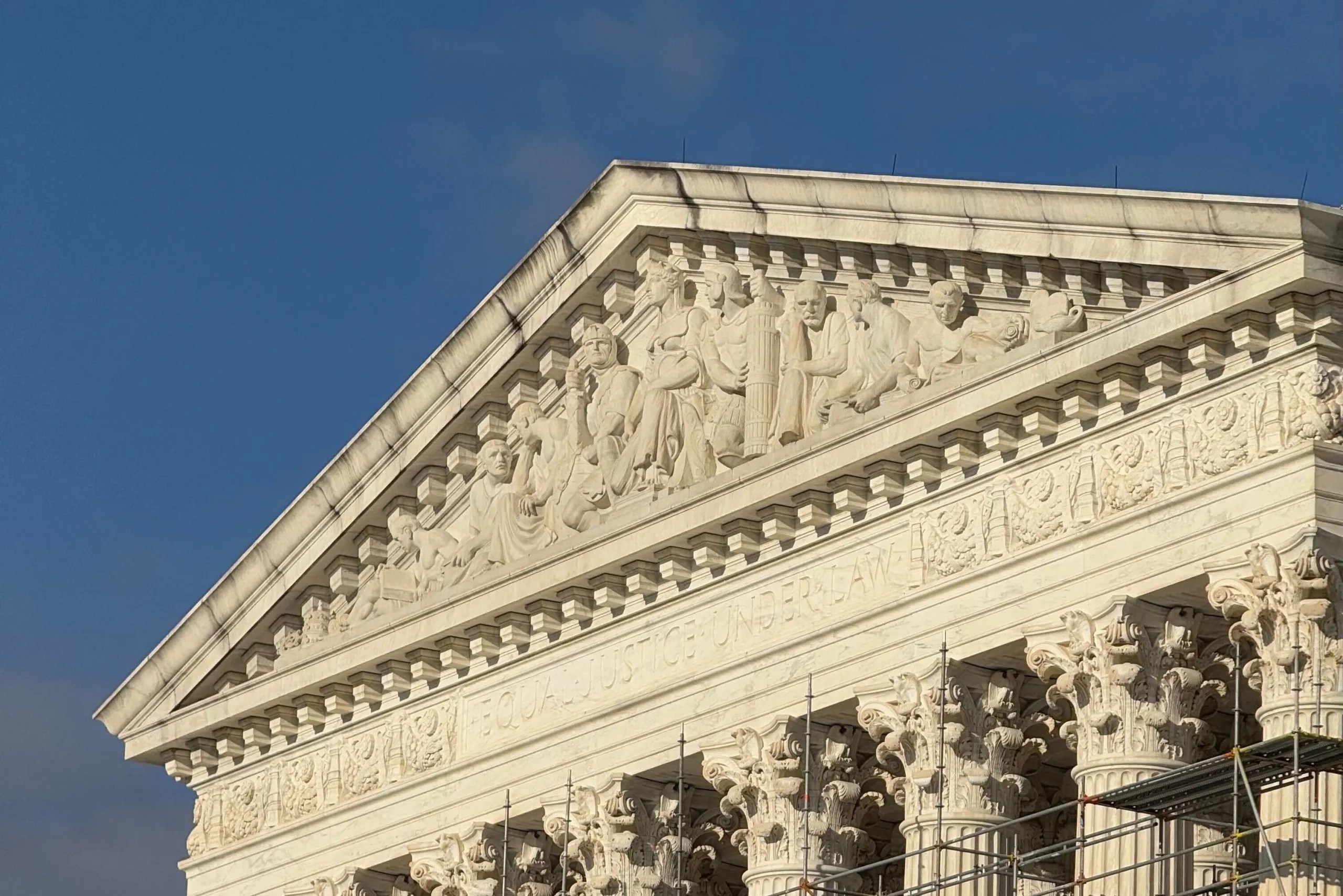
This morning, the Supreme Court will hear argument in a closely watched dispute over President Donald Trump’s firing of Federal Reserve Governor Lisa Cook. We will be live blogging the argument beginning at 9:30 a.m. EST.
Plus, a reminder: we’re hiring! We’re looking for an editor to oversee a new daily newsletter for commercial litigators and corporate counsel that highlights circuit court decisions, relists, denials, en banc grants, and notable dissents.
Latest Opinions
Tuesday morning, the court released its opinions in three argued cases: Berk v. Choy, Ellingburg v. United States, and Coney Island Auto Parts Unlimited, Inc. v. Burton.
- In Berk, the court held that a Delaware law requiring a plaintiff suing for medical malpractice to provide an affidavit from a medical professional attesting to the suit’s merit does not apply in federal court.
- In Ellingburg, the court held that restitution imposed under the Mandatory Victims Restitution Act of 1996 is criminal punishment for the purposes of the Constitution’s ex post facto clause.
- In Coney Island, the court held that the reasonable-time limit outlined in Federal Rule of Civil Procedure 60(c)(1) applies to a motion alleging that a judgment is void.
SCOTUS Quick Hits
- Also on Tuesday, the court released an order list showing, among other things, petitions for review that have been denied. For more on the list, see the On Site section below.
- The justices also heard oral arguments in Wolford v. Lopez, on a Hawaii law that bans gun owners from bringing their guns onto private property that is open to the public without specific permission from the property’s owner, and M&K Employee Solutions, LLC v. Trustees of the IAM Pension Fund, on how to calculate what a business owes if it withdraws from a multi-employer pension plan.
- As noted above, starting at 9:30 a.m. EST today, we will be live blogging as the court hears oral argument in Trump v. Cook, on the president’s effort to remove Lisa Cook as a member of the Federal Reserve Board of Governors. On Monday, the Associated Press reported that Federal Reserve Chair Jerome Powell will attend today’s argument.
- The court has not yet indicated when it will next release opinions. If the court follows its typical pattern, the earliest the next opinion day may be is Friday, Feb. 20.
Morning Reads
- Bessent says Powell attending Supreme Court arguments on Lisa Cook is a mistake (Fred Imbert, CNBC) — Treasury Secretary Scott Bessent responded on Tuesday to the reports that Powell will be at the court for the argument in Trump v. Cook, describing attending the argument as “a mistake,” according to CNBC. “If you’re trying not to politicize the Fed, for the Fed chair to be sitting there trying to put his thumb on the scale, that’s a mistake,” Bessent said.
- Clement Bucks Trump in Defending Fed’s Cook at Supreme Court (Justin Wise, Bloomberg Law) — During Wednesday’s argument, Cook will be represented by Paul Clement, “a lawyer who’s proven integral to the conservative legal movement’s successes at the Supreme Court” and who served as U.S. solicitor general under President George W. Bush. “Clement’s appearance is notable,” according to Bloomberg Law, because he “is likened to the LeBron James of the legal profession because of his mastery of the law and command in framing arguments.” Over the past year, he’s worked on several lawsuits in opposition to the Trump administration, including a dispute over Trump’s executive orders targeting Big Law firms and Harvard’s “fight against the president’s attempt to bar its foreign students from entering the US.”
- Trump Threatens New Trade War as Court Weighs Whether to Check Him (Ana Swanson and Tony Romm, The New York Times)(Paywall) — As the country awaits the Supreme Court’s decision on Trump’s tariffs, the stakes of the dispute appear to be ratcheting up, according to The New York Times. The president “has issued a series of new, belligerent threats against European countries in recent days that have threatened to start another trade war with some of America’s closest allies,” like a 200% tariff on French wines and champagnes and new tariffs on countries that oppose the United States’ effort to buy Greenland. “Legal experts said that Mr. Trump would most likely issue the new tariffs using the same emergency law that he has used to target imports from nearly every country during his second term. That law, the International Emergency Economic Powers Act, is under scrutiny at the Supreme Court.”
- Supreme Court nixes Sixth Circuit ruling on grant funding for anti-abortion states (Steve Garrison, Courthouse News Service) — In Tuesday’s order list, the Supreme Court announced that it had vacated a judgment from the U.S. Court of Appeals for the 6th Circuit regarding Tennessee’s eligibility “for millions of dollars in federal family planning funding,” according to Courthouse News Service. A 6th Circuit panel had sided against the state in a dispute over a Biden-era “U.S. Department of Health and Human Services rule that required Title X grant recipients to provide neutral, nondirective counseling and referrals for abortions to patients who request it.” Since then, the Trump administration has “restored Tennessee’s $7 million grant,” but Tennessee still “petitioned the U.S. Supreme Court to vacate the judgment,” which it has now done.
- Trump’s appeal of Oregon ruling barring National Guard deployment gets June hearing in 9th Circuit (Maxine Bernstein, The Oregonian) — The U.S. Court of Appeals for the 9th Circuit will hear argument in early June “in the federal government’s appeal of an Oregon federal judge’s injunction that blocked the deployment of National Guard troops to Portland,” according to The Oregonian. “Chief Judge Mary Murguia set aside a time for argument after lawyers for President Donald Trump’s administration refused to drop the appeal, at least for now, despite losing before the U.S. Supreme Court last month in a similar case from Illinois.”
A Closer Look: Attending West Virginia v. B.P.J.
At the end of my last story about applying through the Supreme Court lottery to attend oral arguments, I wrote that: “Beginner’s luck or not, I submitted seven new requests on Nov. 18 – so we’ll see if lightning strikes twice.” And it did. After initially being placed on the waitlist for both Little v. Hecox and West Virginia v. B.P.J. – the cases on transgender athletes – I received an email on Dec. 26 granting my ticket to attend the latter case.
On Jan. 13, the date of oral argument, I walked from Union Station to the Supreme Court, arriving at the building promptly at 9 a.m. EST. There, I was greeted by a crowd of roughly 200 demonstrators in front of the court’s metal fence perimeter. As I made my way to the center, I passed two foldable tables – one from the ACLU and one from Lambda Legal. The ACLU had premade signs reading “Trans kids belong,” “Our freedom is more than a game,” and “Together We Win: Fight for the T in Team,” plus materials for DIY signs and canary yellow foam fingers. At least four other groups were also present, including XX-XY Athletics (identifiable by their teal logo shirts), DIAG (Democrats for an Informed Approach to Gender), AFPI (America First Policy Institute), and “Save Women’s Sports.”
By the time my group (officers divided us into sets of four) entered the courtroom, the justices had already started questioning West Virginia Solicitor General Michael Williams, as we were the second argument of the day. I sat on the last mahogany bench in the back left, with a clear view of most justices – though Justice Brett Kavanaugh was mostly obscured by a head in front of me. That said, the space behind the bar felt surprisingly roomy; and despite this argument’s high profile, there were plenty of empty seats – much of the action seemed to be taking place outside the court.
As for the justices themselves, several observations: Throughout the argument, Justice Clarence Thomas kept rocking back and forth in his chair, his gaze shifting between the ceiling and the bench. Justice Samuel Alito (like Thomas) sometimes appeared bored or disinterested, but then he would suddenly perk up. The chief justice and Justice Elena Kagan, on the other hand, were unflaggingly attentive, keeping unbroken eye contact with the speakers. Perhaps my favorite part of the argument was when Justice Neil Gorsuch pressed Principal Deputy Solicitor General Hashim Mooppan, seemed displeased with his answers, leaned back, and appeared to mouth “come on”– which led Thomas to smile at Gorsuch.
My ultimate takeaway: The justices’ varied postures, glances, and intensities reflected some of the complexity and potential implications of the case before them. But the bottom line seemed clear. As Amy Howe wrote in her analysis of the arguments: “a majority of the justices appeared to agree with the states that the laws can remain in place, even if it was not clear how broadly their ruling might sweep.”
SCOTUS Quote
JUSTICE BARRETT: “Do you agree with everything in the government’s brief?”
MR. BECK: “No, I do not, Your Honor.”
JUSTICE BARRETT: “The United States Government, yeah.”
MR. BECK: “Yes. Yes, Your Honor.”
JUSTICE BARRETT: “Okay.” (Laughter.)
JUSTICE BARRETT: “The government that’s on your same side.”
MR. BECK: “Yes, I understand.” (Laughter.)
MR. BECK: “I agree with every –“
JUSTICE BARRETT: “I’m not asking you to throw your case away.” (Laughter.)
MR. BECK: “I fully endorse the United States’ brief, Your Honor.”
On Site
From the SCOTUSblog Team

Supreme Court denies review in several gun cases
The Supreme Court on Tuesday morning turned down several petitions for review challenging the ban on the possession of guns by people who have previously been convicted of felonies. However, the justices did not act on a similar case brought by a woman convicted of passing a fake check nearly two decades ago.
Argument Analysis

Supreme Court appears sympathetic to gun owners’ challenge to Hawaii law
The Supreme Court on Tuesday appeared to side with a group of Maui gun owners in their challenge to a Hawaii law restricting their ability to bring their guns onto private property that is open to the public. After approximately two hours of oral arguments, virtually all of the court’s six Republican appointees seemed to agree with the challengers.
Opinion Analysis

Court holds there is a time limit on challenging void judgments
The court on Tuesday held in Coney Island Auto Parts Unlimited, Inc. v. Burton that litigants do not have unlimited time to challenge judgments as void. Rather, Federal Rule of Civil Procedure 60(c)(1) places a “reasonable-time limit” on such motions, wrote Justice Samuel Alito in the majority opinion.
Posted in Featured, Newsletters