SCOTUStoday for Wednesday, January 7
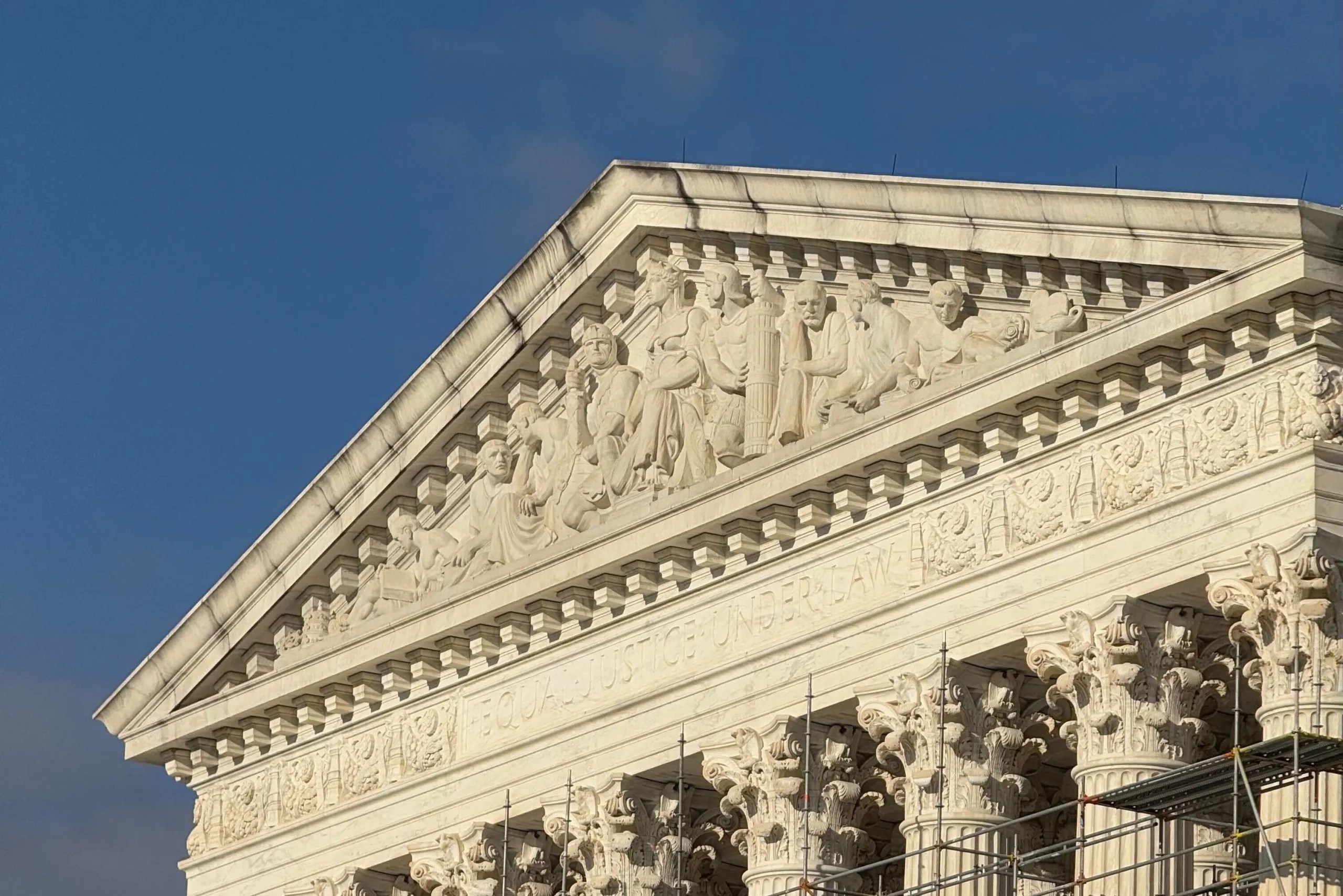
On this day in 1972, Justices Lewis Powell and William Rehnquist joined the Supreme Court. It was one of the rare occasions when the court gained more than one new member at one time. Rehnquist went on to become the chief justice in 1986.
SCOTUS Quick Hits
- The Supreme Court has indicated that it may announce opinions on Friday at 10 a.m. EST. SCOTUSblog will have an opinion day live blog Friday morning beginning at 9:30.
- The court’s January argument session will begin on Monday, Jan. 12. The court will hear seven arguments over two weeks, including on transgender athletes; the latest chapter in the court’s gun rights jurisprudence; and President Donald Trump’s bid to remove Lisa Cook, a member of the Federal Reserve’s Board of Governors.
Morning Reads
- Abortion stays legal in Wyoming as its top court strikes down laws, including first US pill ban (Mead Gruver, Associated Press) — The Wyoming Supreme Court on Tuesday struck down multiple state-level abortion restrictions, including “the country’s first explicit ban on abortion pills,” holding that they “violate the state constitution,” which protects adult residents’ “right to make their own health care decisions,” according to the Associated Press. “The justices sided with the state’s only abortion clinic and others who had sued over the abortion bans passed since 2022, when the U.S. Supreme Court overturned the landmark Roe v. Wade decision.”
- Ninth Circuit won’t rehear Trump admin challenge to discovery order in mass layoffs suit (Hillel Aron, Courthouse News Service) — The U.S. Court of Appeals for the 9th Circuit has “declined to rehear a challenge by the Trump administration to a discovery order in a case filed by federal labor unions to block the executive branch from initiating mass layoffs,” according to Courthouse News Service. The dispute over the discovery order, “which directed the federal government to produce the plans for reorganization and layoffs,” gained significance after the Supreme Court in July cleared the way for the challenged reductions in force to take place. After that ruling, the discovery order “remained live,” and the Trump administration asked a three-judge panel for the 9th Circuit to block it. The panel declined to do so, and now the full 9th Circuit has declined to intervene. According to Courthouse News Service, “[i]t is unclear whether the Supreme Court will take up the issue of discovery.”
- Lawyer Alan Dershowitz asks Supreme Court to revive CNN lawsuit (David Thomas, Reuters)(Paywall) — Retired Harvard Law professor Alan Dershowitz has asked the Supreme Court to revisit New York Times Company v. Sullivan, its landmark 1964 ruling on libel laws, by taking up “his lawsuit against CNN over its reporting on his defense of President Donald Trump,” according to Reuters. In that 1964 ruling “and subsequent decisions,” the court said “that in order to win a libel suit, a public figure must demonstrate the offending statement was made with ‘actual malice,’ meaning with knowledge it was false or with reckless disregard as to whether it was false.” Dershowitz contends that only government officials should have to meet that high burden of proof, not all public figures.
- Has the Supreme Court Helped Save Democracy? (Richard M. Re, Democracy Project) — In a column for NYU Law’s Democracy Project, Richard M. Re reflected on the Supreme Court’s relationship to the Trump administration and why the judiciary’s response when politicians threaten the rule of law “must involve both carrots and sticks.” In the year ahead, Re wrote, the carrots will likely be “big executive branch wins on matters like the removal power. And the sticks will be executive branch defeats or draws on issues like tariffs, birthright citizenship, or the Federal Reserve.”
- What to Expect from the Supreme Court in 2026 (Kim Wehle, The Bulwark) — In a column for The Bulwark, Kim Wehle painted a more negative picture of the Supreme Court’s relationship with the Trump administration, contending that many rulings from the past year will “leave legal historians aghast and appalled.” In 2026, Wehle noted, the court is expected to rule in many more cases involving the administration, including disputes over birthright citizenship, tariffs, and the president’s ability to remove the heads of independent, multi-member federal agencies. Siding with Trump on these issues would further “the rule of law’s demolition,” Wehle argued.
A Closer Look: Rehearings at the Supreme Court
If you read through the court’s Dec. 15 order list, you likely came across a few things. First, the court took up Pitchford v. Cain, a case on racial discrimination in jury selection. Second, the justices – as usual – had a lengthy list of certiorari denials.
Third, the court denied four petitions for rehearings, including Real Estate Exchange, Inc (REX) v. Zillow Group, Inc., an antitrust challenge to real estate listing practices by the National Association of Realtors and Zillow. The justices had already denied certiorari in the case in October, but REX sought rehearing on the basis that the court’s denial of certiorari did not account for “intervening circumstances” – specifically, a new decision out of the U.S. Court of Appeals for the 7th Circuit.
But what, exactly, are rehearings? (Apologies, but this one is a bit technical.)
Under Rule 44 of the Supreme Court Rules, the grounds for rehearing depend on the nature of the court’s previous action:
- If following a merits judgment, Rule 44.1 requires the petition to “state its grounds briefly and distinctly.” To grant rehearing, the court requires a majority vote of the justices, initiated by the justice who concurred in the original judgment or decision.
- If following a cert denial, Rule 44.2 requires the petition to “be limited to intervening circumstances of a substantial or controlling effect or to other substantial grounds not previously presented.”
In both cases, the rehearing petition must be filed within 25 days of a judgment or decision (with some limited exceptions for merits judgments, like if the court or a justice shortens or extends the time), and, among other things, include a certification that it is presented “in good faith and not for delay.”
That said, it is extremely rare for a court to grant a rehearing on the merits. Indeed, according to Steve Vladeck, “a rehearing of a ruling in an argued case” has not occurred since 1965, when the justices sent a case back to the lower court to deal with several apparently unresolved issues.
Motions to rehear a petition are also rarely granted. As Vladeck has explained, such motions are typically brought to control the timing of when a case is returned to a lower court. This is because filing a petition effectively “freezes” the case – under court rules, the “mandate” (the formal order that sends a case back to a lower court to restart legal proceedings) is automatically stopped while a rehearing petition is pending. Without that mandate, the lower court has no legal authority to move forward.
But there is one type of rehearing that is somewhat more common: when the justices are equally divided, typically due to a justice’s death or recusal. When such a split occurs, the lower court’s ruling stays in place and the Supreme Court does not create a binding national precedent. To avoid this legal limbo, the court often rehears such a case once a new justice is confirmed (who can then break the tie).
The takeaway: Unless your case has garnered a split vote, it might not necessarily be the best use of resources to ask the court to take another bite at the apple.
SCOTUS Quote
JUSTICE SCALIA: “Ms. Maguire, could — could you repeat the first sentence you uttered in this argument? I — I hesitated to jump in so early, but could you repeat it verbatim? Maybe you had committed it to memory. Good — good counsel often does that.”
MS. MAGUIRE: “Thank you, Justice Scalia. It’s — my very first sentence was, ‘This case is about who gets to decide the facts that trigger a mandatory minimum sentence.’”
JUSTICE SCALIA: “No, that wasn’t it.”
CHIEF JUSTICE ROBERTS: “It started, ‘Mr. Chief Justice.’”
On Site
From Kelsey Dallas

Maduro’s arrest places these Supreme Court rulings in the spotlight
As former Venezuelan President Nicolás Maduro prepares to fight drug, weapon, and narco-terrorism charges in the United States, legal scholars and analysts are putting a spotlight on past Supreme Court rulings about presidential authority, extraterrestrial arrests, and the rights of foreign leaders.
Contributor Corner

Did Justice Kagan debilitate the administrative state?
In a column for SCOTUSblog, Andy Smarick revisited the oral argument in Trump v. Slaughter and highlighted Justice Elena Kagan’s comments about Congress’ right to supervise legislative functions. She implied, according to Smarick, “a fascinating unitary legislative theory that could dramatically restrict the administrative state.”
Posted in Featured, Newsletters