Supreme Court appears sympathetic to gun owners’ challenge to Hawaii law

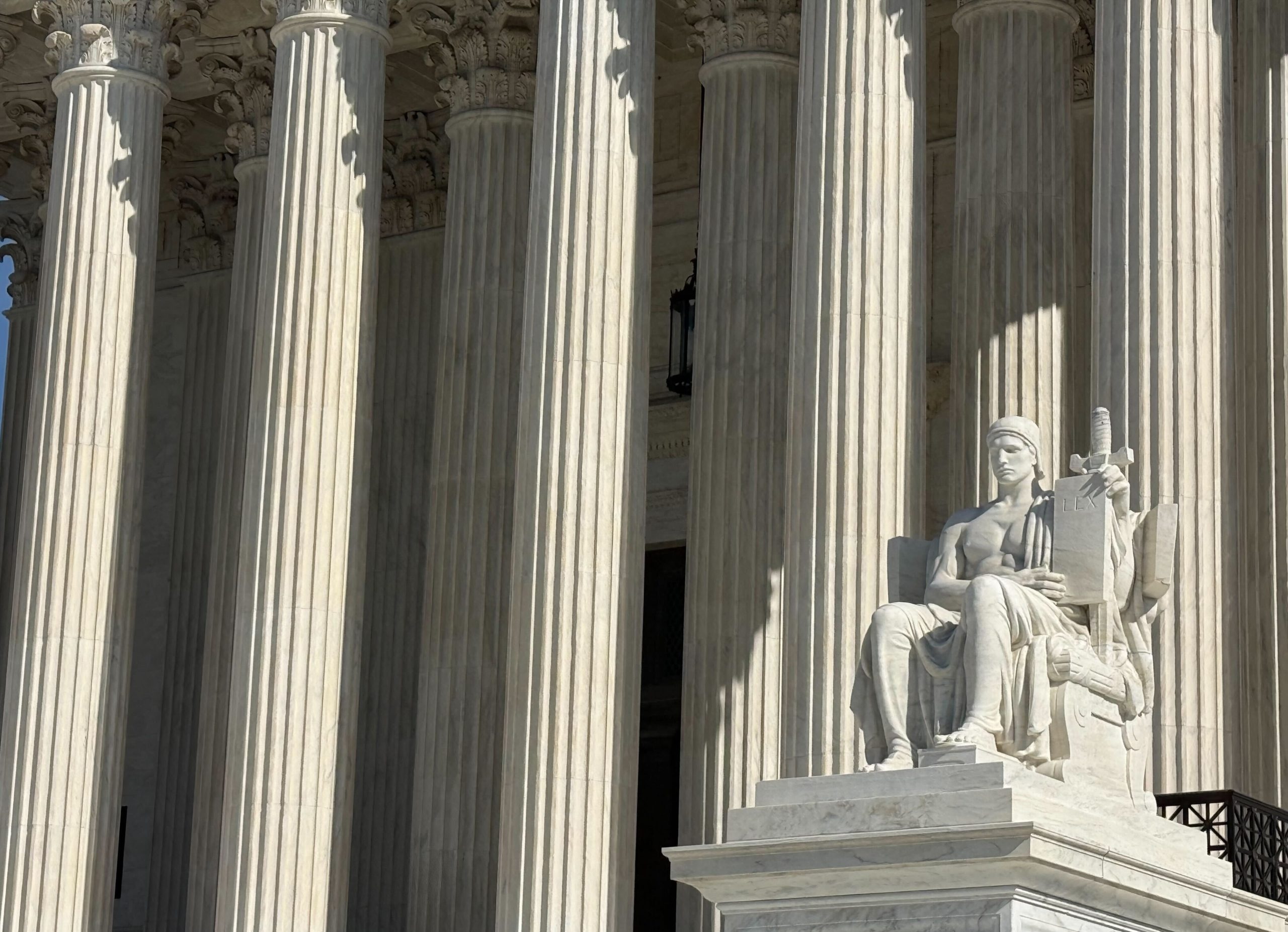
The Supreme Court on Tuesday appeared to side with a group of Maui gun owners in their challenge to a Hawaii law restricting their ability to bring their guns onto private property that is open to the public. After approximately two hours of oral argument in Wolford v. Lopez, virtually all of the court’s six Republican appointees seemed to agree with the challengers that the law, which requires the gun owners to obtain express permission from the property owner, violates the Second Amendment’s right to bear arms.
Chief Justice John Roberts suggested that recent cases show that the Second Amendment has unfairly been a “disfavored right,” while Justice Samuel Alito told a lawyer for Hawaii that the state was “relegating the Second Amendment to second-class status.” Hawaii passed the law in 2023 in response to the Supreme Court’s decision in New York State Rifle & Pistol Association v. Bruen, in which the court struck down a New York handgun-licensing law that required New Yorkers who wanted to carry a handgun in public to show a special need to defend themselves. In Bruen, Justice Clarence Thomas explained in his majority opinion that courts should only uphold gun restrictions that are “consistent with the Nation’s historical tradition of firearm regulation.”
The Hawaii law bars anyone with a concealed-carry permit from bringing a gun on private property that is open to the public without explicit permission from the property owner. A violation of the law is a misdemeanor, punishable by up to a year in prison.
The lower courts upheld the law. The U.S. Court of Appeals for the 9th Circuit concluded that “a national tradition likely exists of prohibiting the carrying of firearms of private property without the owner’s oral or written consent.”
Representing the gun owners, lawyer Alan Beck told the justices that “[b]y banning people from carrying firearms on private property that is open to the public unless they first obtain affirmative permission, Hawaii has run roughshod over that constitutional right.” Hawaii’s “ban,” Beck continued, “is inconsistent with our national historical tradition of firearms regulation.”
Neal Katyal, who represented Hawaii, countered that “[t]here is no constitutional right to assume that every invitation to enter private property includes an invitation to bring a gun.” In some states, he continued, “an invitation to shop is not an invitation to bring your Glock.”
Justice Ketanji Brown Jackson suggested that the Hawaii law did not implicate the Second Amendment as much as it did issues of property rights. The real question at the center of the case, she told Beck, is how states treat property owners’ consent.
Beck resisted that characterization, telling Jackson that the law implicates “arms-bearing conduct” and therefore the Second Amendment.
But Jackson remained unconvinced. Laws can affect someone’s interest, she contended, without implicating constitutional rights. “The Second Amendment,” she argued later, “yields to the property interests of a private property owner,” and the law regulates the “form” of the “property owner’s consent.”
Justice Neil Gorsuch, however, was more sympathetic to Beck’s argument. “[W]e don’t allow,” he said, “governments to redefine property rights in other contexts that would infringe other constitutional rights.” For example, he noted, the court rejected that theory in Tyler v. Hennepin County, in which it held that a Minnesota county violated the Constitution when it foreclosed on a home and kept the additional proceeds beyond the owner’s tax debt – a case in which Katyal had represented the county.
Principal Deputy Solicitor General Sarah Harris, arguing on behalf of the Trump administration in support of the challengers, told the justices that viewing this case through the lens of property rights, as one that is “just tweaking how you consent,” would open the door to countless gun regulations. For example, she suggested, states could ban tenants from owning guns without their landlords’ consent.
If the Second Amendment does apply to the Hawaii law, then the justices would next have to determine whether the law fit within a historical tradition of regulating guns within the United States. In Justice Elena Kagan’s view, Hawaii had done so. The laws that Hawaii had cited as historical analogs, she told Beck, “flip a default rule as to how explicit consent has to be.” “[W]hy isn’t that pretty good evidence,” she continued, “that this is something that states historically have done?”
A major point of contention was Hawaii’s reliance on an 1865 Louisiana law, enacted as part of that state’s Black Codes to restrict the rights of formerly enslaved people, that prohibited the carrying of guns on premises or plantations – that is, private property – without the property owner’s consent. Gorsuch questioned whether the court should consider the law at all, calling it an “outlier.” He posited that for the “people [who] like to cite the Black Codes” to support gun restrictions, those laws “otherwise … would be garlic in front of a vampire.”
Alito echoed Gorusch’s sentiment, telling Katyal that the law was designed to prevent formerly enslaved people from defending themselves against members of the Ku Klux Klan and “racist law enforcement officers.”
Katyal agreed that the Black Codes “are undoubtedly a shameful part of our history.” However, he said, “that doesn’t at all mean that this particular law is irrelevant to Second Amendment analysis.”
But Jackson suggested that a failure to consider the Black Codes would signal a problem with the Bruen test itself. It would mean, she stressed, that courts were not “tak[ing] into account” “all of the history of regulation.” When “we have a test that asks us to look at the history and tradition,” she said later in the argument, courts should consider those laws.
Roberts saw a different problem: in his view, “one of the motivating concerns … in our decisions under the Second Amendment, is that it is a disfavored right.” How can it be, he asked Katyal, that “it is a very clear constitutional right under the First Amendment” for a candidate for office to go up to the front door of a private home and knock on it to campaign, but the candidate can’t do the same thing with a gun? “[W]hat exactly,” Roberts queried, “is the basis for the distinction?”
Alito asked a similar question. He noted, and Katyal agreed, that it would violate the First Amendment for a restaurant owner to ban particular political attire without “express consent from the owner of the restaurant.” Here, he suggested, there is “a violation of the right that the Court held is protected by the Second Amendment in Bruen, which is the right of law-abiding citizens to carry a firearm … outside of the home for purposes of self-defense.”
Katyal emphasized that “the Second Amendment … is not a second-class right.” But at the same time, he said, there are key differences between the First Amendment and the Second Amendment. Moreover, he added, a ruling in favor of the challengers, “for the first time would be saying there is some sort of right here which no commentators recognize, no treatises recognize, no court has ever recognized.”
At the same time, the justices did not appear persuaded by the Trump administration’s argument that the Hawaii law violates the Second Amendment simply because it is “pretextual” – that is, Harris argued, it “subjects just one right, the Second Amendment, and one class of people, the people of Hawaii who had a license to carry after Bruen, to its presumptive ban.”
In Justice Brett Kavanaugh’s view, the court did not need to address this issue. “Why,” he asked Harris, “are we making it complicated?” If “[t]he text of the Second Amendment covers arms,” and “there’s no sufficient history supporting the regulation,” it would be the “end of case” as far as he was concerned.
The only Republican appointee who seemed even remotely sympathetic to the state was Justice Amy Coney Barrett. She asked Beck, for example, whether Hawaii could pass a law that prohibited gun owners from bringing firearms onto property that is not open to the public – such as a private home. When Beck suggested that the state could not, she expressed surprise, saying “Really? … Hawaii can’t have that law about … my house or Justice Gorsuch’s house?”
Barrett later reiterated a point that she has made in earlier gun rights cases. When Harris told Barrett (in response to questioning) that the state could not enact a law banning guns at gas stations without affirmative consent to address a rash of robberies at those stations, Harris cited the lack of “relevantly similar analogues” to such restrictions. Barrett pushed back, telling Harris that the absence of a law regulating a particular issue does not mean that there was no historical tradition of such restrictions.
Posted in Court News, Featured, Merits Cases
Cases: New York State Rifle & Pistol Association Inc. v. Bruen, Wolford v. Lopez