Supreme Court takes up four new cases, including disputes on geofence warrants and Roundup weedkiller

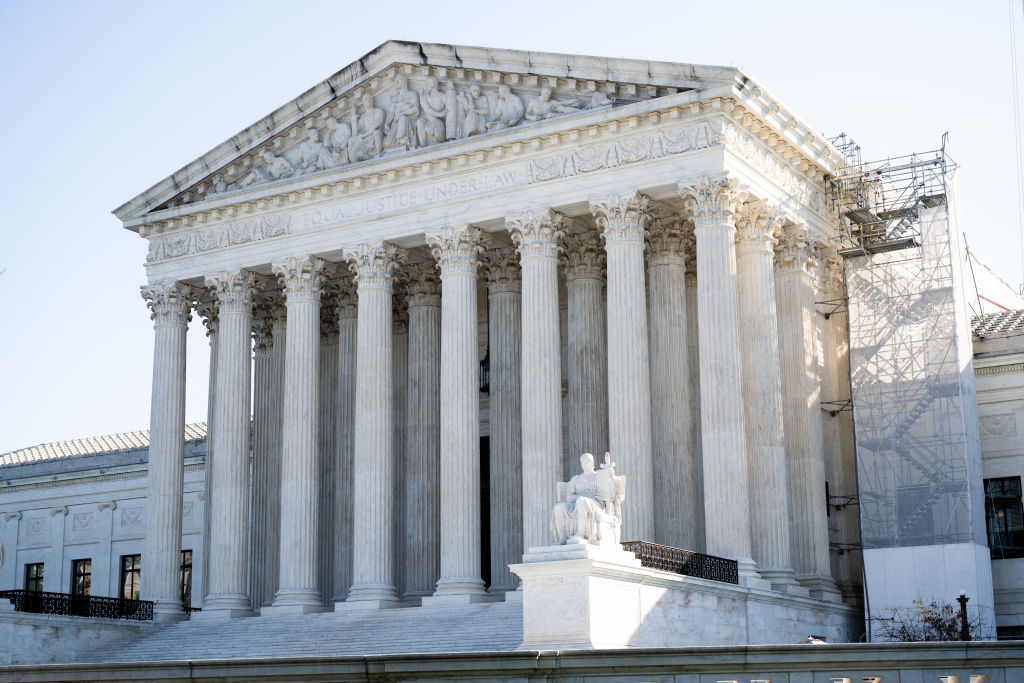
The Supreme Court on Friday afternoon added four new cases, on topics ranging from the Fourth Amendment to federal preemption, to its Oral Argument Docket for the 2025-26 term. The announcement came as part of a list of orders released from the justices’ private conference earlier in the day.
Just two days after the court issued its decision in one Fourth Amendment case, Case v. Montana, the justices agreed to take up Chatrie v. United States, another case involving the Fourth Amendment. Chatrie is a challenge to the constitutionality of “geofence warrants” – a warrant that allows law enforcement officials to obtain the identities of cell phone users who were in a particular area at a specific time.
The defendant in the case is Okello Chatrie, who was convicted of robbing a credit union outside Richmond, Virginia, at gunpoint in 2019, stealing $195,000. He was arrested as a result of information obtained from Google using a geofence warrant. When Chatrie challenged the constitutionality of the geofence warrant, a federal district judge agreed with him that the use of the warrant likely violated the Fourth Amendment. But the judge nonetheless allowed prosecutors to use the evidence that they had gathered as a result of the warrant on the ground that detectives had acted in good faith. Chatrie pleaded guilty and was sentenced to nearly 12 years in prison.
The U.S. Court of Appeals for the 4th Circuit upheld Chatrie’s conviction. By a vote of 2-1, the majority concluded that there had not been a “search” that would trigger the Fourth Amendment because Chatrie had voluntarily provided his information to Google. The full 4th Circuit agreed to rehear the case and, in a one-sentence unsigned opinion, affirmed the three-judge panel’s ruling. Chatrie then came to the Supreme Court, which agreed on Friday to weigh in on the constitutionality of the execution of the geofence warrant.
The justices also agreed to tackle a dispute arising from one of the thousands of lawsuits filed against Monsanto over its Roundup weedkiller. The plaintiff in the case, John Durnell, contends (among other things) that Monsanto failed to warn him that Roundup causes non-Hodgkin’s lymphoma. A jury awarded him $1.25 million in damages.
Monsanto argues that federal law trumps Durnell’s failure-to-warn claim brought under state law, and on Friday the justices agreed to decide whether that is true for failure-to-warn claims based on labels when the Environmental Protection Agency has not required the warning.
The court also granted two other cases:
- Hikma Pharmaceuticals v. Amarin Pharma, involving a lawsuit against a generic drugmaker for encouraging patent infringement.
- Anderson v. Intel Corporation Investment Policy Committee, involving the standards for pleading a claim, based on the underperformance of a fund, that a fiduciary has violated the duty of prudence required by the Employee Retirement Income Security Act.
The justices will release more orders from Friday’s conference on Tuesday at 9:30 a.m. EST.
Posted in Court News, Featured, Merits Cases
Cases: Monsanto Company v. Durnell, Hikma Pharmaceuticals USA Inc. v. Amarin Pharma, Inc., Chatrie v. United States, Anderson v. Intel Corporation Investment Policy Committee