Trump v. Cook: an explainer

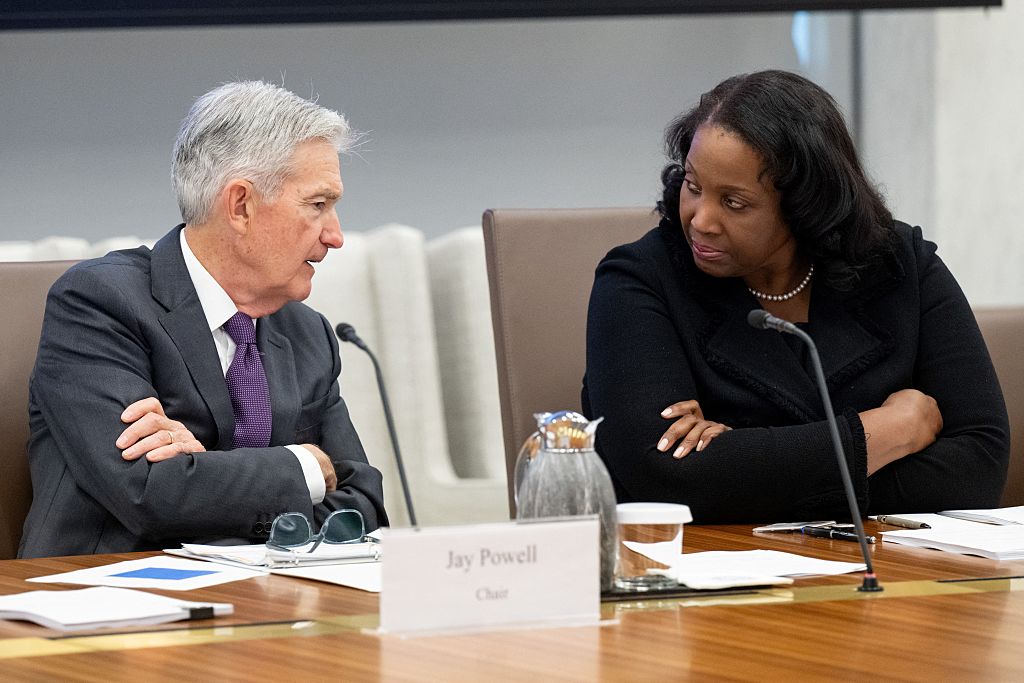
The Supreme Court will hear oral argument on Wednesday in yet another battle over the president’s power to remove the heads of independent agencies created by Congress. Wednesday’s arguments center on President Donald Trump’s attempt to fire Lisa Cook, a member of the Federal Reserve’s Board of Governors, in August 2025. The lower courts have thwarted his efforts to do so thus far, but the Trump administration has asked the Supreme Court to put those rulings on hold while Cook’s challenge to her firing continues. Here’s a brief explainer on the case, Trump v. Cook, and its background.
What is the Federal Reserve?
The Federal Reserve is the central bank of the United States. Its responsibilities include conducting U.S. monetary policy – that is, taking steps to achieve big-picture economic objectives, such as “price stability, full employment, and stable economic growth.”
The Fed is also an independent government agency. Unlike most agencies, it is funded primarily through interest earned on securities that it owns, rather than through the normal congressional appropriations process.
The Fed’s main governing body is its seven-member board of governors.
Who is Lisa Cook?
Cook is a 62-year-old economist with bachelor’s degrees from Spelman College and Oxford (where she was a Marshall Scholar) and a Ph.D. from the University of California, Berkeley. In 2022, Cook was confirmed as a member of the Federal Reserve’s Board of Governors – the first Black woman to hold that position. In 2023, then-President Joe Biden nominated Cook to serve a new 14-year term on the board.
What are the laws governing the tenure and removal of members of the Fed’s Board of Governors?
Under the Federal Reserve Act, members of the Fed’s Board of Governors are nominated by the president and confirmed by the Senate for staggered 14-year terms – a structure intended to prevent any single president from “stacking the deck” with his own nominees. They can only be removed by the president, and only “for cause,” a term that the law does not define.
What grounds did Trump cite in firing Cook?
Trump cited allegations that Cook had committed mortgage fraud before joining the Fed – specifically, that within the space of two weeks she had designated both a house in Michigan and a condo in Atlanta as her “primary residence” when taking out loans, which would have allowed her to receive more favorable terms. And that alleged fraud, Trump said, “[a]t a minimum … exhibits the sort of gross negligence in financial transactions that calls into question [her] competence and trustworthiness as a financial regulator.”
In Cook’s filings in the Supreme Court, she “unequivocally” denies the accusations of mortgage fraud, and she says that she is “prepared to refute the allegations in an appropriate forum.” In September, NBC News reported that Cook described her Atlanta condo on financial forms as a “vacation home,” which would undermine the mortgage fraud allegations.
What happened in the lower courts?
Judge Jia Cobb of the U.S. District Court for the District of Columbia issued an order in September that required the Fed to allow Cook to remain in her job while her challenge to her firing moves forward. In Cobb’s view, Cook was “substantially likely” to succeed on her claim that the Trump administration had “violated the Federal Reserve Act because her purported removal did not comply with the statute’s ‘for cause’ requirement.” The Federal Reserve Act’s “for cause” removal provision, Cobb wrote, is best interpreted to mean that members of the board of governors can only be removed for things that they do while they are in office “and whether they have been faithfully and effectively executing their statutory duties.”
Cobb also ruled that Cook’s firing likely violated her rights under the Fifth Amendment’s guarantee of due process, because she had a property interest in her position as a member of the board of governors and therefore was entitled to be notified and have a chance to contest her firing before she was removed from it.
Although the Trump administration had contended that Cobb could not review the president’s determination that he had “cause” to fire Cook, Cobb rejected that argument. If a court is “confronted with a justification offered by the President that does not clearly fall within the President’s statutory authority,” she wrote, courts have a “responsibility to review” that determination. Otherwise, she said, the “for cause” removal provision “would provide no practical insulation for the members of the Board of Governors.”
Cobb declined to put her ruling on hold while the government appealed. The Trump administration went to the U.S. Court of Appeals for the District of Columbia Circuit, which – by a vote of 2 to 1 – also left Cobb’s ruling in place.
What happened next?
The Trump administration went to the Supreme Court on Sept. 18, asking the justices to pause Cobb’s ruling and allow it to fire Cook. U.S. Solicitor General D. John Sauer told the court that Cobb’s order keeping Cook in office was “yet another case of improper judicial interference with the President’s removal authority.”
Cook urged the justices to leave Cobb’s order in place. She argued that allowing the Trump administration to remove her from office now would “dramatically alter the status quo, ignore centuries of history, and transform the Federal Reserve into a body subservient to the President’s will.”
On Oct. 1, the justices put off ruling on the Trump administration’s request to freeze Cobb’s order. Instead, they announced that they would hear oral arguments on the administration’s application in January.
What is the issue before the Supreme Court on Wednesday?
As a technical matter, the question before the court is whether it should pause Cobb’s ruling (allowing the president to fire Cook) or instead leave it in place (allowing Cook to remain in her job) while litigation continues. But as a practical matter, a significant factor in a court’s inquiry into whether to grant temporary relief is the merits of the underlying dispute – that is, whether the president’s attempted firing of Cook was proper.
What has the Supreme Court said and done about Trump’s efforts to remove the heads of other multi-member independent agencies?
In proceedings last year on its interim docket, the court allowed Trump to fire other independent agency heads, including members of the National Labor Relations Board, the Merit Systems Protection Board, the Consumer Product Safety Commission, and the Federal Trade Commission, despite federal laws protecting them against removal without good cause.
In December, the justices heard oral arguments in the case of Rebecca Slaughter, a member of the Federal Trade Commission whom Trump fired in March. Although the court has not yet issued its decision, a majority of the justices appeared to agree that the law governing the removal of FTC commissioners – which bars the president from firing them except in cases of “inefficiency, neglect of duty, or malfeasance in office” – violates the constitutional separation of powers between the three branches of government.
What has the Supreme Court said about the Federal Reserve Board, and what was its rationale?
In its order allowing the Trump administration to remove members of the NLRB and the MSPB, the majority responded to the officials’ argument that permitting their firings to stand would call into question the structure of other independent multi-member agencies, including the Federal Reserve. The majority described the Federal Reserve as “a uniquely structured, quasi-private entity that follows in the distinct historical tradition of the First and Second Banks of the United States.”
What are the arguments that the Trump administration is making?
The Trump administration emphasizes that the issues before the court are narrow – and do not involve either the Fed’s independence or the constitutionality of the “for cause” removal protections for the board of governors.
Instead, the Trump administration argues, there are three questions in the case. The first is whether under either the Constitution or federal law Cook is entitled to formal notice and a hearing before she can be fired. The answer, the government says, is no. Cook does not have a constitutional right, the Trump administration says, because the Supreme Court has ruled that a public office is not the kind of “property” that can provide a right to due process before it is taken away. And if Congress had intended Cook to have a statutory right to a notice and a hearing, the Trump administration adds, it could have said so explicitly – which it has done in other laws.
The second question in the case, according to the Trump administration, is whether the mortgage fraud allegations were a sufficiently good reason for him to fire Cook. As an initial matter, the government says, if the president provides a cause for firing an official like Cook, courts cannot “second-guess his judgment that the removal is justified.” But in any event, the Trump administration continues, the president did have good cause to fire Cook in this case. When the removal restriction was enacted, the Trump administration contends, the phrase “for cause” “required a reason ‘relating to the conduct, ability, fitness, or competence of the officer.’” Trump’s firing of Cook meets that standard, the government writes.
The Trump administration also contends that the court should put Cobb’s ruling on hold because she does not have the power to reinstate Cook – or at the very least does not have the authority to do so temporarily. Among other things, the Trump administration suggests, “[t]he President’s power to remove an executive officer includes the power to suspend the officer until the removal’s lawfulness is resolved.” The Trump administration also notes that a different federal law, the Civil Service Reform Act, “provides a comprehensive scheme of remedies” – including the possibility of reinstatement and back pay – “for federal officers and employees but deliberately excludes Senate-confirmed officers” like Cook “from relief.” That exclusion, the Trump administration posits, indicates that Congress did not want to “allow removed Governors to seek relief, whether reinstatement or back pay.”
What arguments does Cook make?
Cook first insists that courts can review the president’s attempt to fire her. A contrary rule, she argues, “would eviscerate Congress’s choice to safeguard the Board’s independence and protect Board governors from arbitrary removals.” Otherwise, she contends, the president could get around the removal requirement simply by labeling any removal – regardless of the reason or lack thereof – “for cause.”
When courts look at the president’s decision to fire her, Cook continues, it is clear that the basis for his firing was not legally sufficient. The Federal Reserve Act’s “for cause” removal requirement, she says, was intended to incorporate the existing grounds for the removal of other executive officials – inefficiency, neglect, malfeasance in office, or ineligibility. Congress certainly did not “intend[] the Federal Reserve’s governors to enjoy less protection” from removal “than leaders of other multimember agencies,” she stresses.
Cook also pushes back against the Trump administration’s contention that she was not entitled to notice and a hearing before she could be fired. In the 19th and early 20th centuries, she notes, it was established that officials appointed under laws that established a definite term for their service and protected them against removal except “for cause” had a right to notice and a hearing. Moreover, she continues, in the court’s landmark opinion in Marbury v. Madison, Chief Justice John Marshall made clear that “Marbury’s for-cause tenure meant he had a ‘vested legal right’ in his office.”
Cook insists that history and the law support her right to remain in office until her legal challenge to Trump’s effort to fire her is finally resolved. Quoting a “friend of the court” brief filed in the case, she emphasizes that “‘from 1789 to today, courts have consistently held that executive officers threatened with or subject to unlawful removal may properly be retained in office.’”
Is Cook still at the Federal Reserve?
Yes. Cook remains on the job and participated in key policy-making decisions in September, October, and December. At the September meeting, the Fed lowered interest rates for the first time since December 2024; it cut rates again at its October and December meetings.
Cook cites her continued work at the Fed as yet another reason to keep Cobb’s order in place while the litigation continues. There has been no suggestion, she says, “that the economy or the markets have reacted poorly to Governor Cook’s continued participation in Federal Reserve policymaking activities. That the status quo has been maintained for months without any apparent problem only confirms that the public interest favors allowing Governor Cook to retain her office while this suit proceeds.”
Is this related to the criminal investigation of Jerome Powell, the chair of the Fed?
Yes and no. Even before his attempt to fire Cook, Trump had long been dissatisfied with the Fed’s reluctance to lower interest rates, and with Jerome Powell in particular. Trump had publicly mused about the prospect of firing Powell, whose term as chair (although not as a member of the board of governors) expires in May.
The criminal investigation that the Department of Justice launched against the Fed and Powell is being conducted by Jeanine Pirro, the U.S. attorney for the District of Columbia, alleging irregularities in the $2.5 billion renovation of the Fed’s headquarters and Powell’s statements to Congress about that renovation. The White House has said that Trump did not direct Pirro to investigate Powell.
Who will be arguing at the court on Wednesday?
Sauer will represent the Trump administration. Paul Clement, who served as the solicitor general during the George W. Bush administration, will represent Cook.
How long will the argument take?
The court has allocated one hour – 30 minutes per side – for Wednesday’s argument. However, the argument is likely to last significantly longer than that.
When will the court issue its decision?
There is no way to know exactly when the court will issue its decision. However, the court almost always issues all of its rulings by late June or early July.
Posted in Court News, Featured, Merits Cases
Cases: Trump v. Wilcox, Trump v. Slaughter (Independent Agencies), Trump v. Boyle, Trump v. Cook (Independent Agencies), Trump v. Cook