Court holds that U.S. Postal Service can’t be sued over intentionally misdelivered mail

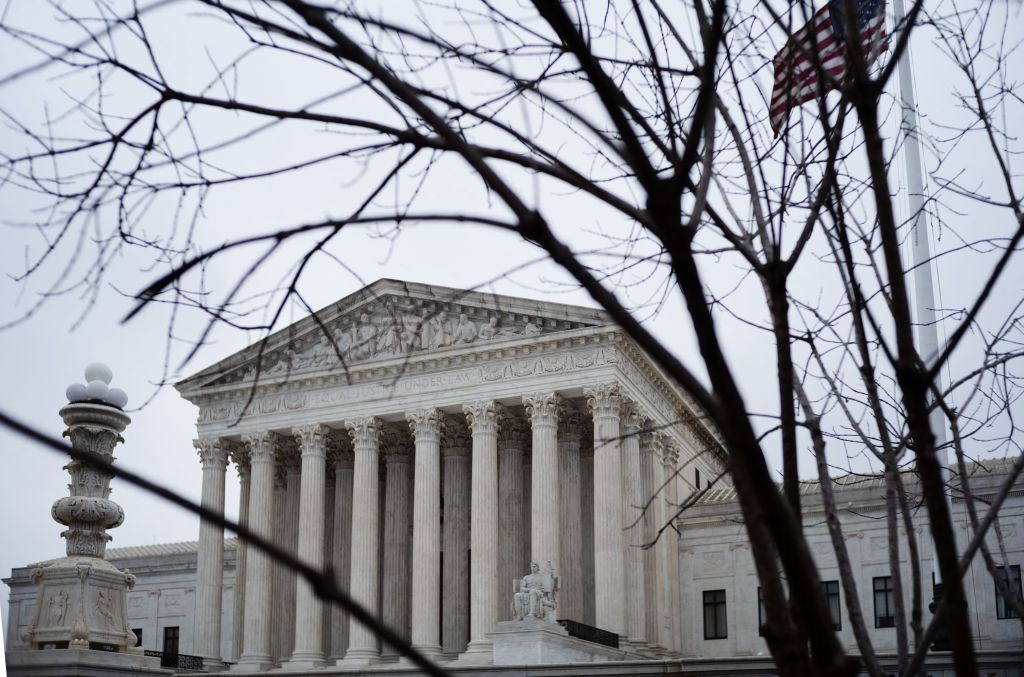
A divided Supreme Court sided with the federal government on Tuesday in U.S. Postal Service v. Konan, a dispute over mishandled mail. Writing for a 5-4 majority, Justice Clarence Thomas explained that a law protecting the U.S. Postal Service from lawsuits over lost or miscarried mail bars lawsuits over mail that was intentionally misdelivered.
Justice Sonia Sotomayor wrote a dissenting opinion, joined by Justices Elena Kagan, Neil Gorsuch, and Ketanji Brown Jackson, in which she argued that the majority opinion provided the U.S. Postal Service far more protection from lawsuits than Congress had intended to give it. “It is not the role of the Judiciary to supplant the choice Congress made because it would have chosen differently,” she wrote.
The case emerged from a conflict between a landlord and postal workers in Euless, Texas. The landlord, Lebene Konan, spent years fighting to have her mail and mail belonging to her tenants delivered to a shared mailbox, but postal workers regularly held it at the post office or returned it to the sender, contending that Konan had not met identification requirements for all addressees.
Ultimately, Konan sued the U.S. Postal Service, two postal workers, and the United States, for, among other things, infliction of emotional distress and business interference, arguing that she was a victim of racial discrimination and that the mail delivery drama had made it more difficult for her to find and keep tenants. The Supreme Court case addressed only her claims against the U.S. Postal Service and United States under the Federal Tort Claims Act, which outlines the circumstances in which the federal government can be sued for damages.
Specifically, the justices were asked to resolve a disagreement between the federal courts of appeals over the scope of the FTCA’s postal exception, which protects the government from suits “arising out of the loss, miscarriage, or negligent transmission of letters or postal matter.” The government contended that the postal exception bars Konan’s claims, because intentional nondelivery of mail is a form of “loss” or “miscarriage.” Konan, on the other hand, argued that the postal exception doesn’t cover intentional acts.
On Tuesday, the court sided with the government, holding that an intentional failure to deliver the mail falls within the FTCA’s postal exception. The ordinary meanings of both “miscarriage” and “loss” point the court to this conclusion, wrote Thomas in the majority opinion. “Because a ‘miscarriage’ includes any failure of mail to arrive properly, a person experiences a miscarriage of mail when his mail is delivered to his neighbor, held at the post office, or returned to the sender—regardless of why it happened,” he wrote. Similarly, “[w]hen Congress enacted the FTCA, the ‘loss’ of mail ordinarily meant a deprivation of mail, regardless of how the deprivation was brought about.”
Thomas also briefly described the scope of the U.S. Postal Service’s work, noting that the postal exception was designed to ensure that the government would not face an endless stream of lawsuits over inevitable mail-delivery issues. “In 2024, the Postal Service’s more than 600,000 employees delivered more than 112 billion pieces of mail—over 300 million a day—to more than 165 million delivery points. Unsurprisingly, given this volume, not all mail arrives properly and on time,” he wrote.
In her dissenting opinion, Sotomayor rejected the majority’s interpretation of “loss” and “miscarriage,” contending that its “reading of the postal exception transforms, rather than honors, the exception Congress enacted.” Congress could have made it clear that the postal exception was broad, Sotomayor wrote, but, instead, it isolated specific forms of misconduct: “loss,” miscarriage,” and “negligent transmission.” “By using ‘specificity’ over ‘generality,’ it follows that Congress intended for this exception” to be limited in scope.
The majority’s interpretation of “loss” and “miscarriage,” Sotomayor continued, is at odds with how those terms are commonly used. “People lose their mail when it gets stuck behind a drawer, not when they intentionally throw it away. … The same is true when the Postal Service loses someone’s mail. The reason is an error, not deliberate wrongdoing,” she wrote.
Sotomayor concluded by challenging the majority’s characterization of what was at stake in the case. “Contrary to the majority’s suggestion otherwise, adhering to the text Congress enacted would not flood the Government or courts with frivolous lawsuits.” And “even if ruling for Konan today would mean more suits against the Government for mail-related intentional torts tomorrow, that would not provide this Court with authority to change the text Congress enacted.”
Posted in Court News, Featured, Merits Cases
Cases: United States Postal Service v. Konan