

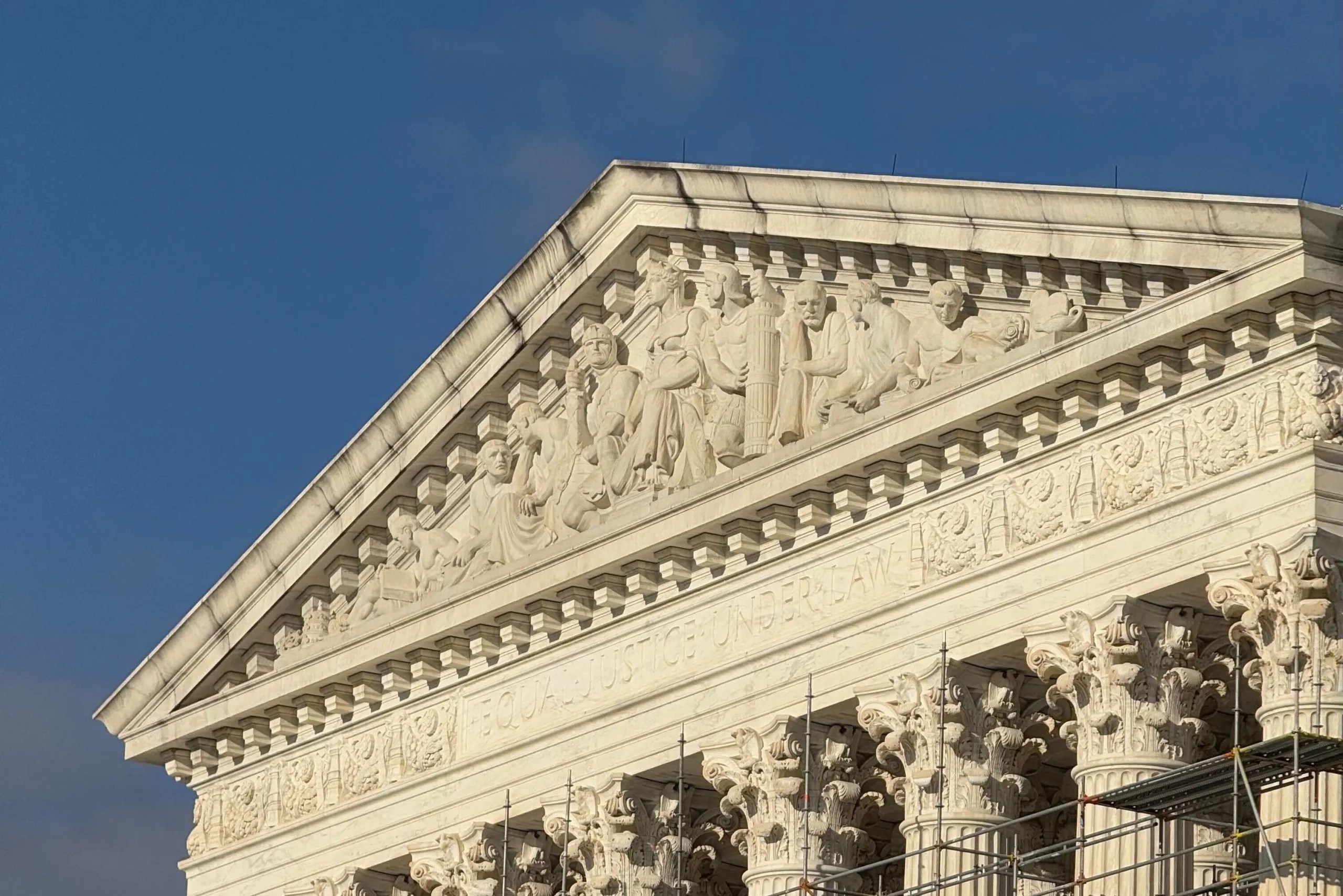


On Monday, the justices heard the first arguments of the court’s February sitting. As most SCOTUSblog readers are well aware, members of the public always have the option of listening to live audio on argument days. But if one is able to do so, there’s still nothing quite like attending an argument in person. This Closer Look is a reminder of what you should know before you go.
As our own Nora Collins wrote about in November, whereas in the past the public had to wait in line to attend oral argument, the court introduced a lottery system in December 2024 (check out her article for that system’s intricacies). For people unwilling to play the lotto or who failed to score a seat through it, the court continues to provide seating to those who wait in line. But such seats are limited – blockbuster cases often require camping out overnight, and even then, entry isn’t guaranteed.
Assuming one gets in, up next is a security screening. While the court advises against taking babies or young children to an argument session, certain things are prohibited completely from being brought into the courtroom. This includes weapons (duh), “pointed objects,” food or beverages of any kind, aerosol containers, electronics, “identification tags (other than military),” bags of a certain size, hats, books(!), and strollers. Fortunately, the court provides lockers where these items can be stored while court is in session. (Of note: Attendees are allowed to bring a notepad and pen.)
But that’s not all. Attendees are also prohibited from “wearing or displaying [] political buttons or attire,” as well as “inappropriate clothing.” Although the latter is undefined, it is apparently strictly enforced. In 2018, for example, a tribal leader was not permitted to attend oral argument in Washington State Department of Licensing v. Cougar Den Inc. because he refused to remove his traditional headdress.
As for the departure protocol, once the argument is over, everyone has to promptly leave the courtroom. If one hasn’t had their fill of the building itself, however, One First Street reopens once the court is done sitting, allowing visitors to enjoy the public portions of the building before it closes at 3 p.m. EST.