Supreme Court agrees to hear case on Colorado dispute over climate change

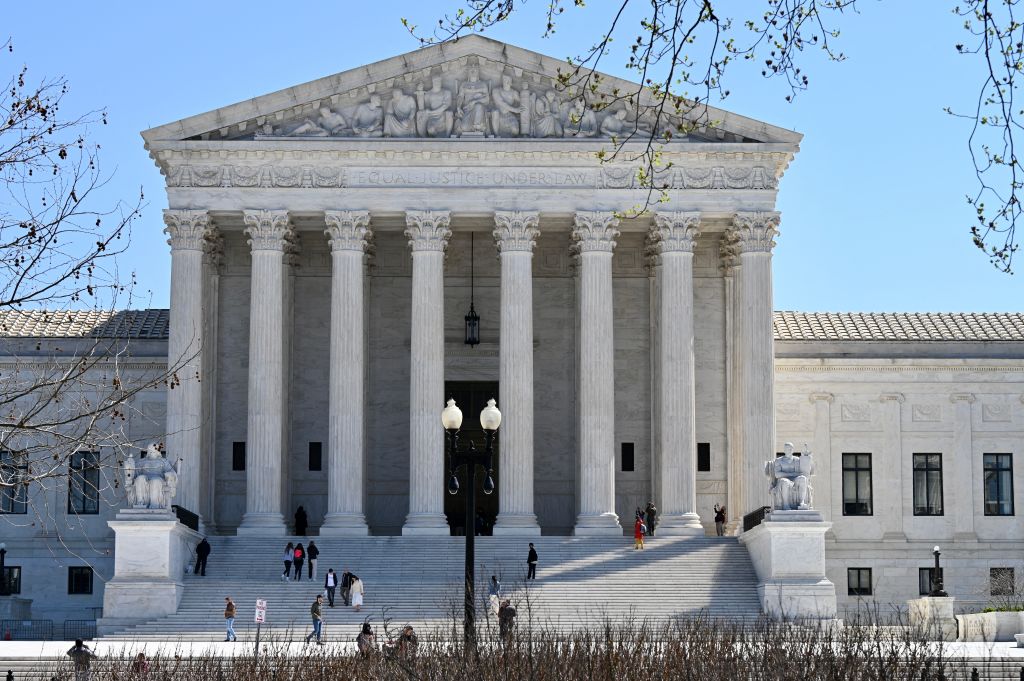
Returning from its winter recess, the Supreme Court on Monday added just one new case to its oral argument docket. In a list of orders from the justices’ private conference last week, the court agreed to review a ruling by the Colorado Supreme Court in Suncor Energy Inc. v. County Commissioners of Boulder County, a case brought under state law by Boulder, Colorado. Boulder contends that oil and gas companies have knowingly played a role in exacerbating climate change and therefore have caused millions of dollars of damage to its property and residents.
The oil and gas companies urged the state courts to dismiss the case, arguing that the state-law claims are superseded by federal environmental laws and the federal government’s power to conduct foreign policy.
The state courts ruled that federal law did not trump Boulder’s claims. While the Colorado Supreme Court indicated that it was “express[ing] no opinion on the ultimate viability of the merits of” Boulder’s claims, it concluded that the oil and gas companies’ efforts to dismiss the case in state court boiled down to an argument “that a vague federal interest over interstate pollution, climate change, and energy policy must preempt Boulder’s claims.”
The oil and gas companies came to the Supreme Court in August, asking the justices to weigh in. They told the justices that the dispute “provides the Court with its best opportunity yet to resolve one of the most important questions currently pending in the lower courts. Energy companies that produce and sell fossil fuels,” the companies wrote, “are facing numerous lawsuits in state courts across the Nation seeking billions of dollars in damages for injuries allegedly caused by the contribution of greenhouse-gas emissions to global climate change. But as the Court has recognized for over a century,” the companies said, “the structure of our constitutional system does not permit a State to provide relief under state law for injuries allegedly caused by pollution emanating from outside the State.”
Without waiting for a request from the justices for its views, the federal government filed a “friend of the court” brief urging the justices to take up the case. It contended that “Colorado … may not apply its law to the companies’ conduct outside the State.”
Boulder urged the justices to allow the lawsuit to go forward. It contended (among other things) that the Supreme Court does not have the power under federal law to review the Colorado Supreme Court’s ruling because it is not yet final. Taking up the case now, Boulder argued, “would require the Court to wade into a thicket of preliminary questions that promise nothing but rabbit holes and dead ends.” But in any event, it continued, the companies’ “novel constitutional theory would vest judges—not legislators—with broad authority to decide” whether federal or state law should apply in particular areas.
After considering the case at five consecutive conferences, the justices on Monday agreed to grant review. They instructed the litigants to address an additional question in their briefs and at oral argument: whether the Supreme Court has the power to hear the case at all.
The justices are likely to hear oral arguments in the fall, with a decision to follow sometime in 2026.
The Supreme Court once again did not act on several high-profile petitions for review that it has repeatedly considered, involving issues such as the Second Amendment rights of people convicted of non-violent felonies, whether states can ban AR-15s and large-capacity magazines, and the parental rights of a Massachusetts couple who contend that middle-school officials hid the social transition of their child from them.
The justices will meet for another private conference on Friday, Feb. 27. They are expected to release orders from that conference on Monday, March 2, at 9:30 a.m. EST.
Posted in Court News, Featured, Merits Cases
Cases: Suncor Energy Inc. v. County Commissioners of Boulder County